Category: Money

How I Make $1000+month Tutoring Less than 8 Hours a Week

Earning extra money doesn’t have to be daunting. Many people shy away from side hustles because they assume these ventures require the same time and effort as a part-time job. However, the reality is that cultivating an additional income stream is not just beneficial; in today’s economy, it’s often necessary.

Having extra money can make a significant difference. It can help cover monthly bills, reduce debt, and save for future goals. While my primary business is online, I’ve also embraced a profitable side hustle that aligns perfectly with my background and skills: tutoring.

As a former elementary school teacher, transitioning into tutoring was a seamless move. Leveraging my teaching experience, I’ve been able to generate over $1000 a month by helping students excel academically.

Here’s how you can do the same:

Identify Your Niche

Start by assessing your skills and knowledge. What subjects are you proficient in? Do you excel in math, science, languages, or perhaps a specific test like the SAT or ACT? Identifying your niche is the first step towards creating a targeted tutoring service.

Set Up Your Tutoring Business

Decide whether you’ll operate online, in-person, or a hybrid of both. Online tutoring has the advantage of reaching a broader audience without geographical constraints. Utilize platforms like Zoom or Google Meet for sessions, and manage bookings through a simple website or tutoring platforms.

Market Your Services

Create a compelling profile highlighting your qualifications and successes as an educator. Use social media, local community boards, and word-of-mouth to promote your tutoring services. Tailor your advertising to target the parents of school-age children or adult learners seeking to enhance their skills.

Pricing Your Services

Determine your pricing based on your expertise, the subject matter, and local or online market rates. Offering package deals or discounted rates for multiple sessions can attract more clients and increase your monthly income.

Provide Exceptional Value

The key to a successful tutoring business is not just in understanding the subject but in how you teach it. Develop personalized learning plans, provide additional resources, and maintain a flexible scheduling system. Your goal is to not only improve your students’ grades but also their overall learning enthusiasm and confidence.

Expand and Scale

As you establish a steady client base, consider expanding your services. Hire other tutors, add more subjects, or even create online courses or workshops for groups. Scaling your business can significantly increase your revenue and impact.

By following these steps, you can turn tutoring into a lucrative side hustle that not only benefits your financial situation but also enriches your personal and professional life. Remember, the key to success in any side hustle is to leverage what you already know and deliver it in a way that meets the needs of your market.

Keep Your Grocery Budget Under Control

Managing your grocery budget can be one of the most effective ways to cut down on your monthly expenses. Unlike fixed costs such as your mortgage or car payments, the amount you spend on groceries is flexible. Here’s how you can take control and potentially save hundreds each year.

1. Establish a Grocery Budget

Track Your Spending: Begin by monitoring your grocery expenditures over a few weeks to understand your spending habits. This tracking will serve as the foundation for setting a realistic weekly or monthly budget.

Set a Budget: Based on your tracking, establish a grocery budget. Commit to this amount and ensure you do not exceed it when you shop.

Challenge Yourself: Once you’re comfortable with your budget, try reducing it incrementally—start with $20 per month. The goal is to find the lowest sustainable amount you can spend without feeling deprived.

2. Maintain a Price Book

Understand Pricing: Store promotions might seem attractive, but are they really saving you money? Maintain a price book—a small notebook or a digital document on your phone—detailing the usual prices of items you frequently purchase.

Compare and Save: Use your price book to compare deals in weekly flyers and determine if special offers are genuinely worthwhile. This preparation can prevent unnecessary trips and impulse buys.

3. Embrace Frugal Cooking

Creative Meals: Incorporate inexpensive meals that your family enjoys into your routine. Dishes like rice and beans, large pots of soup, or chili are nutritious and cost-effective. Consider using meat sparingly or opting for meatless meals to further reduce costs.

Use Leftovers: Make a habit of using all leftovers, perhaps by designating certain days to finish off what’s in the fridge. This practice not only saves money but also reduces food waste.

4. Eliminate Unnecessary Extras

Plan Your Purchases: Always shop with a list to avoid impulse buys. Extras such as gourmet bakery items or checkout aisle snacks can significantly inflate your grocery bill.

Stick to the List: By adhering strictly to your list, you’ll find that many non-essential purchases are easier to skip, which can lead to substantial savings over time.

5. Reap the Benefits

Allocate Savings: With the money you save, consider funding enjoyable activities, paying down debt, or enhancing your financial security. Whether it’s a vacation, reducing credit card balances, or building an emergency fund, the extra cash can help you achieve your financial goals more quickly.

By implementing these strategies, you’ll not only keep your grocery spending in check but also enjoy the benefits of a more disciplined and thoughtful approach to shopping. Start today and watch your savings grow, one shopping trip at a time.

Cut the Cable Cord Without Going Broke: A Guide to Streaming Services

In today’s digital age, traditional cable TV subscriptions are becoming a thing of the past. With the rise of streaming services, viewers now have the flexibility to customize their entertainment experience while saving money in the process. If you’re looking to cut the cable cord without breaking the bank, this guide will walk you through the process and introduce you to ten streaming services, highlighting their benefits and drawbacks.

Why Cut the Cord?

Before we dive into the world of streaming services, let’s discuss why cutting the cable cord is a smart financial move. Traditional cable packages often come with hefty monthly bills, long-term contracts, and channels you might never watch. Streaming services, on the other hand, allow you to select only the content you want to watch, offering a more personalized and cost-effective entertainment solution.

Top 10 Streaming Services: Benefits and Drawbacks

Netflix

Cost: Plans start at $8.99 per month
Benefits: Netflix offers a vast library of original shows, movies, documentaries, and more. Its user-friendly interface and recommendation algorithm make it easy to discover new content.
Drawbacks: The selection might not always include the latest releases, and the cost can increase if you want access to Ultra HD content or multiple screens.

Hulu

Cost: Plans start at $5.99 per month
Benefits: Hulu provides a mix of current TV shows, original content, and a limited selection of movies. Subscribers can access new episodes shortly after they air. You can add a Disney+ and ESPN+ for about $15/month.
Drawbacks: The basic plan includes ads, which can be annoying. To remove ads and access additional content, the price increases. Read here about Hulu + Live TV.

Disney+

Cost: $7.99 per month
Benefits: Disney+ is a must-have for fans of Disney, Pixar, Marvel, and Star Wars content. It also offers exclusive original series and movies.
Drawbacks: While it’s family-friendly, the content might not be as varied as other platforms.

Amazon Prime Video

Cost: Included with Amazon Prime membership ($12.99 per month)
Benefits: Alongside its vast library of TV shows and movies, Amazon Prime Video provides access to original content and the ability to rent or buy additional titles.
Drawbacks: The interface can be less intuitive compared to other streaming services.

HBO Max

Cost: $14.99 per month
Benefits: HBO Max grants you access to HBO’s acclaimed series, movies, and exclusive originals, such as “Game of Thrones” and “Succession.”
Drawbacks: The higher cost might be a deterrent, and the library might not be as extensive as some other services.

Westinghouse Roku TV
Buy on Amazon

Peacock

Cost: Free with ads; Premium plans start at $4.99 per month
Benefits: Peacock offers a blend of current TV shows, movies, and classic content. Some users can access certain shows for free.
Drawbacks: The free version includes ads, and not all content is available in all plans.

Apple TV+

Cost: $4.99 per month
Benefits: Apple TV+ boasts a growing selection of original shows and movies, with a focus on high-quality storytelling.
Drawbacks: The library is currently smaller than other services, and there might be limited third-party content.

Paramount+

Cost: Plans start at $5.99 per month
Benefits: Formerly CBS All Access, Paramount+  offers a mix of current and classic TV shows, movies, and live TV events.
Drawbacks: The original content might not be as strong as other platforms, and the availability of certain shows could be limited.

YouTube TV

Cost: $64.99 per month (for the first 3 months, $72.99 per month thereafter)
Benefits: YouTube TV provides live TV streaming with a wide range of channels, including sports and news. It also offers unlimited cloud DVR storage.
Drawbacks: The higher cost compared to other streaming services might be a concern.

Sling TV

Cost: Plans start at $35 per month
Benefits: Sling TV offers customizable channel packages, allowing you to tailor your lineup to your preferences. It’s a good option for budget-conscious viewers.
Drawbacks: Some channels might not be available in certain packages, and the user interface could be improved.

Creating Your Cord-Cutting Strategy

To cut the cable cord without going broke, consider the following steps:

Assess Your Needs: Determine what type of content you value the most. Are you a movie buff, a sports fan, or a TV show enthusiast?

Set a Budget: Calculate how much you’re willing to spend on streaming services each month. Remember that the costs can add up quickly, so make sure to find the right balance.

Trial Periods: Most streaming services offer free trial periods. Take advantage of these trials to test out different platforms and find the ones that suit your preferences.

Bundle Deals: Some streaming services offer bundle deals or discounts when you subscribe to multiple platforms through a single provider. Explore these options to save even more.

Equipment and Internet: Make sure you have a reliable internet connection and a compatible device (smart TV, streaming stick, gaming console, etc.) to enjoy your chosen streaming services.

Regular Evaluation: Periodically review your chosen streaming services to ensure they still align with your entertainment needs. Cancel any services you no longer use.

In conclusion, cutting the cable cord doesn’t have to drain your wallet. With a plethora of streaming services available, you can tailor your entertainment experience to your preferences and budget. By assessing your needs, setting a budget, and taking advantage of free trials, you can create a cost-effective cord-cutting strategy that allows you to enjoy quality content without going broke. Remember, the key is finding the right balance between the services you love and the cost you’re willing to pay. Happy streaming!


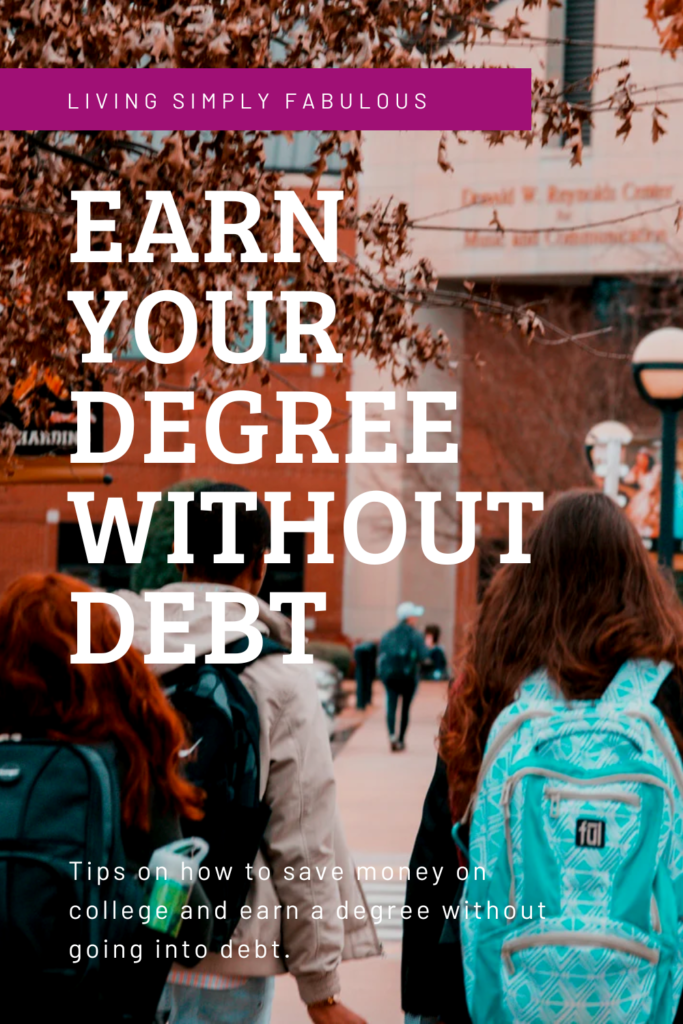
How to Earn a Degree Without Going Into Debt

Pay for college without student loans?

Yes, it’s possible. No matter your financial situation, if you have a desire to get a college education, then, by all means, go for it.

Of all the challenges you’re going to face on the road to graduation, you shouldn’t have to worry about how you’re going to pay for it.

If you’re resourceful, you will be able to find the money and you won’t have to go into a lot of debt either.

According to the Business Insider, student debt continues to rise and the average debt for the 2015 graduating class is $30,100.

When you consider how student debt in the U.S. tops around $1.3 trillion, that’s a lot for an educated and unemployed person to be bogged down with.
 

How College Debt Affects Your Life

While in college, most students don’t worry much about how they’re going to pay back the debt they accumulated the last four years.

The thought is that they will deal with it later, right after they get that high-paying job.

Unfortunately, reality soon sets in when the job offer is much less than they had envisioned or hoped for.

College debt has an adverse effect on the economy as well, according to USA Today.

The more money graduates have to spend on student loans, the less they have to obtain cars, homes or start their families.


Debt, student loan debt, in particular, can cause a delay in building up savings, which can have short and long-term consequences.

Once you pay for rent, transportation, and food in addition to a student loan payment, there’s usually not much left for anything else.

Most people with a ton of college debt usually find themselves struggling to make ends meet or worse, living back under their parents’ roof. There has to be a better way, so how do you get a degree without debt?

Scholarships and Grants

Scholarships


A scholarship is free money awarded to students to pay for some or all of their college costs. If you have a very high GPA or are great in sports, then you should definitely start looking for scholarships to apply to.

Heck, even if you’re not, there are literally thousands of places you can find the money for you to go to school. I’ve seen scholarships awarded to people who successfully use social media in their everyday lives or submitted great videos on a proposed topic.

Scholly is an app that will send you scholarships you qualify for on a weekly basis.

Want to get paid for accomplishments made in high school, such as earning good grades? On Raise.me, colleges will award you money to attend their schools once you graduate from high school.


Grants

Grants are similar to scholarships in that they’re essentially money for college you don’t have to pay back. The difference, however, is that grants are usually awarded on financial need, whereas scholarships are awarded based on merit.

There are federal and state grants available, but you must first complete and submit a Free Application for Federal Student Aid (FAFSA) to see if you qualify.

Another option for finding scholarships and grant money is through foundations and private organizations. You can find a list here to start your search. Many have money that is set aside to help people pay for college.

If you’re part of a specific racial or ethnic group, fraternity, or entering a particular field such as engineering, you will find a few you may be eligible for.

Community College


To be frank with you, no one cares where you went for the first 60 credits of your degree. They only care about who awarded you that said degree. You could go to one school for a few years and then later transfer those credits to your first-choice school.

That’s why going to a community college first is an inexpensive option if you can’t really afford to go to the college of your dreams for all four years.

Another great thing about community colleges is that they usually have partnerships with local universities, which will help to make your transition that much smoother.

Schools feel good knowing they are accepting someone who has demonstrated college-level readiness and you, in turn, get to save thousands of dollars.

Still not convinced?

Consider public college instead of private or stay in-state, which is way less expensive than going out of state.

Related:

Employer Tuition Assistance


If you are employed, check to see if your employer will pay for part or all of your tuition. There are many employer-sponsored programs that help to cover the cost of tuition for employees and their dependents.

Most of the time, these are excluded from your income and are therefore tax-free. One caveat to consider, however, is the length of service required after you receive the tuition assistance.

While some employers won’t pay for your tuition, they may have a partnership with a college or university that will offer a discount if you go through them.

My cousin earned his master’s degree on his boss’ dime and saved $60,000 and a friend of mine earned hers at 25% of the total cost of tuition, so it pays to check with your employer before starting a program.

Exam for College Credit


I wish I had known about this option a long time ago. Not only would I have saved money, but I could have saved time as well.

If you have a few credits you need to finish a degree or want an affordable way to get started, there are programs out there that will allow you to pass an exam to earn college credit.

CLEP, DSST Dantes, and Excelsior are well-known credit by examination programs that allow you to pass a test to earn credit.

This option works like this, you select the course you want to test out of, study, and then take the exam. If you pass, you can turn this into your school and receive credit – just as if you sat in the class for three months.

Depending on the course, you end up paying $100 or so for the exam versus hundreds for a three-credit course. A great bargain for sure and if you have on-the-job experience, your knowledge will make taking these tests seem like a cakewalk.

Another option…

You may want to look into Straighterline, which allows you to take as many classes you want for a monthly fee of $99 (and a one-time fee of $49 per course). You’ll earn credit for many online programs once you pass their exam.

This is a great option if you want to finish a course early, but still, need a little more prep than a study guide. Most schools will accept credit by examination, just make sure yours do.

Savings


My friend was lucky to have a grandmother who left her money specifically to fund her college education. Most of us don’t have a rich grandma.

Or a trust fund for that matter.

As much as we hoped our parents saved for our college fund, reality sets in quickly when we realized they hadn’t. That’s okay because you can start putting away money into your savings to pay for your tuition right now.

That’s okay because you can start putting away money into your savings to pay for your tuition right now.

College 529 savings state plans are another great option, which helps families set aside money to be used later for tuition costs. This can be set up by a parent or grandparent and contributed on your behalf.

You could also sign up for programs such as Upromise which awards cashback from eligible purchases which can be transferred into a savings account at any time.

Rakuten is not specifically set up as a college savings program, but you could encourage family members to sign up and shop through it to get cashback, which could be used to fund college.

Student Loans


All undergraduate and graduate students are eligible to receive federal loans. These loans are easy to receive and are backed by the federal government (Direct Loans and Perkins Loans – read more about each type here).

Unlike grants and scholarships, loans must be paid back after you are no longer enrolled in school. I recommend applying for a student loan when you have exhausted all other options and there’s not enough money to cover the balance.

If you end up having to take out a student loan, do so responsibly. Take out only what you need and can pay back in a reasonable amount of time. Assess your employment options after college and really think hard about how much debt you want to take on.

There’s a difference between the salaries of a teacher and a doctor…

…so let’s be real.

Will you be able to pay hundreds of dollars each month on top of rent, food, and utilities?

Get Another Job or Side Hustle

I understand that getting a second job while going to school is not an ideal situation. However, having extra money you could throw into savings is.

If you’re able to get a part-time job before school starts, use that money solely to pay for tuition.

Don’t want another job? Start a side hustle.

Side hustles can help you to earn money to pay for tuition. The more money you make, the easier it is for you to earn a degree without debt.

Related:

If you think blogging may be for you, check out my step by step guide on how to start a blog here.

 

7 Sure Fire Ways to Stop Living Paycheck to Paycheck


Ready to stop living paycheck to paycheck? Sure you are. Counting the days to your next payday is stressful and no way to live. If you are having a hard time meeting your financial obligations between paydays, then you need to make some changes.

Here are few simple ways on how to stop living paycheck to paycheck.

& ways to stop living paycheck to paycheck


Change Your Mindset About Money

Let me be honest with you, if you don’t change how you act and respond to money, you’re never going to get a grasp of your finances. You’ll find yourself spending more than you have and begging for payday to come.

And if you never have enough money to cover even the basics, such as rent and utilities, how are you going to have enough to live your best life?

Our upbringings had a lot to do with how we view money as adults, no matter if we admit this to ourselves or not. If you grew up in a household of spenders, you’re going to view money differently than someone who grew up with savers.

That’s just a fact.

Also, our parents are our first teachers so we may find we mimic their actions when it comes to how we handle money.

What words come to mind when you think about money? These words will give you some insight into your feelings about money and if they are of abundance or scarcity.

Knowing this will help you to understand how your thoughts, feelings, and actions affect your relationship surrounding money.

Related: 15 Personal Finance Books That Have Changed My Life

Assess Your Financial Situation


Be honest with yourself and admit you have a problem. Don’t think you have a problem? Well, let the figures do the talking. It’s easy to lose track of your spending, so for an entire month write down every place you spend money.

No matter how little or how small write it down. Jotting down your expenses will help you to see where your money goes.

Once you have tracked your expenses for a month, you may be surprised that you are spending a lot of money in areas you didn’t expect.

One time I tracked my expenses and realized that most of my money went to girl nights and happy hour with my coworkers. At the time it didn’t seem like a big deal, but when I put the figures down on paper I realized my money was going down the drain.

So, for an entire month, keep a journal with:

  • Income from all sources (include money from your side gigs)
  • Expenses (expected and unexpected)
  • Feelings (this will help you to get a sense of how your emotions control your money)

Get Debt Relief - See How Much You Can Save

Create a Budget

Did you know that even millionaires keep a budget? Though they may not use an envelope system or cut coupons, you better believe they know exactly where their money is going each month. A budget helps you to:

  • Not spend money you don’t have and
  • Save money you do have

Creating and keeping a budget will help you get a hold of your finances and stay on track. With a budget, you’ll be able to track how much money you make and how much you have to spend. If you know what bills are due and for how much, you’ll get a sense of your net worth.

To create a budget, you can read this step-by-step guide and read these tips over at Money Crashers as well as use tools such as Mint (my favorite) and You Need a Budget (I’m currently using their free trial and will give a review of it in a later post).

Cut Out Unnecessary Expenses


If you tracked your expenses for a month and created a budget, you already know there are some areas that need to be cut. Expenses such as eating out seem to be huge budget busters and can be eliminated with little preplanning and creativity.

When I looked over my expenses, I realized I spent a lot of time and money over at Starbucks. As much as I love their coffee, I didn’t need to have it every day.

I purchased a Keurig, started making coffee at home, and literally saved over $75 a month! I also cut out my gym membership, because I never went and preferred walking outdoors anyways. Even at only $20 a month, it was still a waste of money.

Determine what you need to cut so you can have more money to spend each month. Do you really need 200 channels?

If not, try cutting out cable and use a digital antenna instead. Afraid you’ll miss your favorite shows? Subscribe to Netflix, Hulu or Amazon Prime Video and you will still save thousands each year.

Build Up Your Emergency Fund

Accidents happen when you least expect them and usually during the worse time possible. You can expect your car to break down right after you’ve paid your car note or to get sick when you don’t have any health insurance.

That’s life and the only way to deal with these unfortunate events is to be well prepared with an emergency fund.

Are you prepared? Probably not. According to this Credit Donkey’s survey, half of Americans have less than $500 in their savings.

This scary statistic is true for the poor as well as the middle class who are considered to have everything going well for them.


Before you start saving money and paying off debt, you need to at least build up an emergency fund of at least $1000. This fund needs to be in cash where you can get to immediately.

When I took Dave Ramsey’s Financial Peace University, I was ready to quit after learning this was Baby Step #1. I then realized that I had to do it because I was one paycheck away from catastrophe.

Once you have your $1000 saved, though, don’t stop there. A sound emergency fund should have enough to cover three to six months of living expenses. All of you know no one’s job is 100% safe.

CLICK HERE FOR WAYS TO MAKE MONEY FROM HOME WITH

LITTLE OR NO EXPERIENCE

Stop Trying to Keep up with the Jones’

The Jones family looks good over there with the big house, nice cars, and green grass, but looks can be deceiving. While you’re trying to keep up with them, you didn’t realize that the Jones were in debt up to their eyeballs.

We tend to buy things we can’t afford to impress people we don’t even like. This is how we get ourselves in a lot of trouble and become bogged down with debt. These are the actions that keep us broke and put our financial health at risk.

Yes, your neighbor’s car looks great but did you know they probably leased it because it was the only way they could afford it? Or that the husband had to pick up extra hours at work to pay for it?

There’s no way to know another person’s financial situation and what looks good on the outside may be crumbling on the inside. Make sure to assess your finances first and only make purchases that make sense for you and your household.

Make More Money

Sometimes cutting expenses and eliminating unnecessary debt may not be enough to make ends meet. You may actually need to make more money to stay afloat.

You can make more money by getting a second (or better) job or find ways to bring in additional income.

I am not a proponent of getting a second job, simply because in my opinion, it takes you away from your family. I mean, if you’re young and single, then, by all means, go for it.

However, I think you can find other ways to make money such as selling items you no longer need or completing side gigs that will bring in additional income.

Related:

When I side hustled my butt off to make extra money I was then able to get better control over my finances. I tutored students after school, completed surveys, sold items from my home and signed up for cashback programs such as Rakuten and Swagbucks.

Every bit of extra change helped a lot. I also started blogging, which eventually took the place of my income as an elementary school teacher.

You can to start your own blog by following my step-by-step guide here. Starting a blog is easy and affordable and if you sign up with Hostgator, you can use my link here.

Making more money may help you to build an emergency fund and add to your savings, however, if you don’t control your spending you’ll suffer. I know people who are making close to six figures a year and are still living paycheck to paycheck.


15 Personal Finance Books that Have Changed My Life

Wish you learned how to manage your personal finances in high school, instead of trigonometry? So, do I.

Unfortunately, most of us didn’t learn how to create a budget or to create an emergency fund, until it was too late. Some of us learned from trial and error (or crash and burn).

No matter if you were busting budget spreadsheets from the time you got your first lemonade stand or learned on the fly, here are some of the best personal finance books you will want to add to your reading list.

Why Personal Finance Books


Being educated about finance is important to your overall life. How much money you make, how much money you keep, and your credit score will determine the neighborhood you live in. It will also determine if you’ll live a comfortable life for you and your family or struggle to make ends meet.

Making the right decisions about your money is easiest when you have the right education. Now, do you have to go to school and get your MBA? No. Most of what you need to live your best financial life can be found in books.

Since most of us were exposed to financial literacy in school, we’re often responsible for gaining our own knowledge.

If you’re looking to create a budget, save money, or make more money – here are a few of my favorite personal finance books you should definitely check out.

Other posts you may be interested in:

I’m the first to admit that I’m not the best when it comes to taking care of my finances. Yes, I have made some good decisions over the years such as earning a master’s degree and buying my house at the age of 30 as a single mom.

I’ve also made some foolish ones as well, such as buying a Volvo that had a bad transmission (and tires that made a scraping sound when I turned the wheel) or emptying my 401K to pay bills because I left my job without a plan.

Like many of you, no one taught me about credit and investing. Much of what I learned was discovered through trial and error. Good thing, I found a few books that I have read that show me how to be smarter about money.

Here’s a list of the personal finance books that have changed my life.

Rich Dad Poor Dad by Robert Kiyosaki

I first read Rich Dad Poor Dad when I was a freshman in college. I can’t remember if it was one of the books assigned to us by one of my professors or something I picked up on my own.

Most likely it was a book I picked up when I should’ve been reading a textbook, but that’s not the point. After reading this book, my view on money and entrepreneurship changed forever. I still have the same copy I purchased 20 years ago and I’ve read it several times since.

Kiyosaki writes about how he had two dads, his biological dad and a man he looked up to as a mentor. His father, a professor at a local college, was educated but broke. On the other hand, his other dad didn’t have a college degree or any formal education but was a rich businessman.

He goes on to say that he learned a lot about both men, but his rich dad taught him a lot about money and building wealth. This book showed me that being rich is a mindset and no matter if you want to be an entrepreneur or not, you will find nuggets in this book.

Best Personal Finance Books for Beginners

The Money Book for the Young, Fabulous & Broke by Suze Orman

I Will Teach You To Be Rich by Ramit Sethi

The Total Money Makeover by Dave Ramsey

One of the best finance gurus to follow is definitely Dave Ramsey. With a disdain for credit cards and car payments, Ramsey wrote one of my favorites, The Total Money Makeover.

If you’re looking for sound money advice from someone who is not only rich but who was broke, became rich, lost his money and regained his wealth again, then Dave Ramsey is your man.

For me, I have a hard time taking diet advice from someone who has never been fat. I feel the same way when it comes to money, it’s easy to talk about how easy it is to be rich if you’ve always been rich.

Other Books to Check Out…

The Millionaire Next Door: The Surprising Secrets of America’s Wealthy by Thomas Stanley

The Purposeful Millionaire: 52 Rules for Creating a Life of Wealth and Happiness Now by James R. Nowlin, J.D

Love Your Life Not Theirs: 7 Money Habits for Living the Life You Want

One of the ways we get ourselves in financial trouble is by trying to keep up with the Jones’. Rachel Cruz agrees and in her book Love Your Life Not Theirs: 7 Money Habits for Living the Life You Want is a manual on how to stop wanting what others have (but we can’t afford).

Sound advice from someone who grew up in a household where being financially responsible was taught (she’s Dave Ramsey’s daughter), Rachel breaks it down on how we can have great lives, without going into debt and without feeling like you’re missing out.

Love Your Life Not Theirs is one of the few personal finance books I ever pre-ordered simply because I was excited to read it. Rachel has a YouTube channel that has sound advice.

Check These Great Reads Out, Too


America’s Cheapest Family by Steve Economides


Retire Inspired by Chris Hogan

The 4-Hour Work Week by Tim Ferris

Some people have discounted Tim Ferris’ mantra that you can work as little as four hours a week and live a rich and successful life. I disagree, to a point. I believe it’s possible to work 4 hours a week, but you have to put the time in first.

It is possible to lay out on a beach somewhere and live off of passive income. However, most of us know that passive income isn’t quite passive, especially not in the beginning.

I like the 4-Hour Work Week because Ferris tells us that as long as we have an infrastructure and system in place, then it is possible to have a four hour workweek.

These systems including starting businesses in profitable niches with little overhead and automatic processes. He shows how he started working from home by asking his boss for the opportunity.

Best Personal Finance Books of All Time


Think and Grow Rich: The Landmark Bestseller – Now Revised and Updated for the 21st Century by Napoleon Hill


The Richest Man in Babylon by George S. Clason

Gold Diggers and Deadbeat Dads

I admit it, I was interested in Gold Diggers and Deadbeat Dads because of the title. Good thing the book met my expectation and I have kept this book in my bag to refer to when I need a reality check.

The author talks about how she and others were financially devastated by trusting those she loved with their money.

As a woman who has done financially better than most of those around me, I am always being hit up for a loan to get someone out of their own mess. When I should have been paying my bills, I was paying others.

Though I have never cosigned for a car or an apartment for a boyfriend or family member, I have given money when I shouldn’t have.

This book will show you the power of no and how it’s okay to help others on occasion, but not to risk your own financial health to save someone who doesn’t care about theirs.

You will either resonate with the stories in this book or get scared to death by them. Either way, this is a must-read for all women and one of my favorite life-changing personal finance books.

Also, Check Out these Personal Budget Books


Smart Women Finish Rich: 9 Steps to Achieving Financial Security and Funding Your Dreams by David Bach


Live Richer Challenge by Tiffany Budgetnista Aliche

Have you read any of these books on my list? If so, what did you think of them? Do you have any to add?


Hey, if you’re looking for a way to cover some of these books on your list, sign up for here a free account with Swagbucks. Not only will you get to participate in great surveys and games, but you’ll earn SB to redeem for gift cards such as Amazon.

A Few Things to Consider Before You Buy Your First House

Buying a house is a dream for some people, but without preparation, it can quickly turn into a nightmare. If you want to purchase a home I commend you and recommend that you give some thought about it first. Before you jump head first into home ownership, consider these few things before you buy your first house.

Things to consider before buying your first house.


How’s Your Credit?

If I had a penny for every person who has ever applied for a loan who didn’t know their credit score, I would be rich by now. I never understood the reasoning for this.

Just like I would never use my debit card without knowing how much money I had in my account, I would never apply for credit without knowing my FICO score.

Your credit, but more importantly your FICO score, will show a lender how credit-worthy you are. If your credit score is 625 and the lowest they’ll go is 650, you will most likely be denied for a mortgage.

To them, you’re too much of a credit risk. In addition, knowing your credit score will not only let you know what you need to work on but will help you to shop around for great rates.

Related:


So before you start looking on Zillow, check your credit first. Need to order your credit report and score? Go to AnnualCreditReport.com to view your credit score. Because of the Fair Credit Reporting Act, every person is entitled to a free credit report once per year from each of the major credit bureaus. Just make sure to order all three, because each of them reports differently.

If you see issues on your credit, the time to fix them is before a lender runs it.

Other Ways to Check Your Credit and Score

Are You Ready?

Just because you want to buy a house now doesn’t mean you’re ready to. Planning to move out of the area in the next two years? Then buying a home right now may not be the best thing to do. When buying a home, plan on living there for at least five years.

Why?

Unless you like losing money, you should look at purchasing a home as a long-term investment.


In the first few years into your mortgage, you are only paying on interest and it takes a while before you start paying towards your principal.

Unless your neighborhood sees a spike in prices, not enough time will pass for you to accumulate any equity.

I thought I would live in my house and sell it in three years to move to a bigger house. Less than a year later the market crashed and I was underwater (still was 8 years later).

As you assess your readiness to buy a house, check your finances. If you are living paycheck to paycheck and barely making ends meet, buying a house will put you in a very precarious situation. Part of the reason so many people defaulted on their mortgages was that most of them couldn’t afford them in the first place.

Are You Ready to Buy a House: Checklist

Can You Afford to Buy a House?

Ready to buy a home? If so, can you afford to? Many people think buying a home is cheaper than renting, but this isn’t always the case. Yes, you’re able to get a tax credit for mortgage interest as a homeowner, but you also face more expenses.

When you rent an apartment or a house, you call the landlord when something stops working or breaks. As a homeowner, it’s up to you to find – and pay – for someone to fix the problem.

Also when considering if you are ready to buy a house, consider if you can afford to buy a home. To do this, you will need to take in account your debt-to-income ratio. A lot of people only consider what they make and ignore what they owe.

More debt will not only lower your credit score, but it will also decrease the amount a lender is willing to loan to you. Start paying down bills before you start thinking of buying a house.

Let’s say you currently rent an apartment for $1,500 a month, you might think you can also afford a mortgage for that amount too. Right? Wrong. Unless you’re spending less than 28% of your salary on housing, you cannot afford to have a $1,500 mortgage.

In addition, if you live in a condo you’ll have condo fees on top of your mortgage as well as HOA fees if you live in a homeowners’ association. Add together your mortgage payment, utilities, fees, and repair costs, you may be in over your head.


How to Determine Your Debt-to-Income (DTI) Ratio

To determine your debt-to-income ratio, add up your expenses and divide it by your total income. For example: if your expenses equal up to $1500 and your monthly income is $5500, then divide…

1500/5500 = 0.28 or 28%…

…which is your debt-to-income or DTI.

All lenders have their own guidelines, but according to the Consumer Financial Protection Bureau, most can’t go over a 43% debt to income ratio when offering a qualified mortgage.

Follow these guidelines when determining what you can afford:

  • Mortgage Payment – 28% of gross income (max)
  • Total Housing Payment (Principal, Interest, Taxes and Insurance) – 32% of gross income (max)
  • Total Debt Including Mortgage – 40% of gross income


Do You Have Enough Money Saved?

No matter how much money you have in your savings account right now, it’s probably not enough. Most people underestimate the amount of money they will need to have saved up when buying a home. They think that since they already pay rent, they can afford a mortgage.

Like I mentioned before, that thinking is wrong and will make you frustrated and unable to purchase a home.

When looking to buy a home, make sure you have enough money to put up 20% for a down payment. As a first time homebuyer, you may be able to put in as little as 10%, but lenders want to be sure that you have skin in the game too.

A gift from family is great, but don’t depend on it. Always aim for 20% of the home’s purchase price.


In addition to the down payment, some other costs you will need money for:

  • Debts (lenders may require you to pay some completely off)
  • Earnest Money Deposit
  • Home Inspection
  • Closing Costs
  • Moving Fees
  • Repairs and renovations

Make sure that you have enough money to carry you throughout the entire home buying process. When I purchased my home, I was shocked at all the money I had to put out before I ever signed on the dotted line.


I hope these tips were helpful in deciding if you’re ready to buy your first home. Get a few things in order before you pick up the phone to call a real estate agent. I know a few people who go into an agent’s office only to leave disappointed because they’re not quite prepared to become homeowners.

Your home will probably be one of the biggest purchases you’ll ever make in your lifetime. Going in blind will leave you devastated, resentful and worse – broke.

Money Mistakes Women Make that Keep Them Earning Less Than Men

It’s a well-known fact, yet still frequently dismissed, that women earn approximately 79 cents for every dollar earned by men. This persistent wage gap is undeniably rooted in workplace discrimination, where women are often overlooked for promotions and raises compared to their male counterparts, despite having similar education and experience. While systemic change through legislation and shifts in societal behavior will take time, there are immediate, actionable steps that women can take to enhance their financial stability and work towards closing this gap.

The Persistent Wage Gap

Despite progress in many areas, pay inequity persists due to ongoing discrimination against women in the workforce. This inequality extends beyond just salaries, influencing promotions, job security, and the professional respect afforded to women. As we work towards broader societal and legislative changes, women must adopt personal strategies to mitigate these challenges.

Empowering Financial Decisions

In recent years, women have gained more control over their finances and are increasingly responsible for major economic decisions. This shift brings an empowering opportunity to directly influence their financial health and long-term security. By making informed and strategic decisions, women can build wealth and avoid the pitfalls of debt.

Personal Financial Empowerment

As a single mother and the primary financial decision-maker in my household, I experienced firsthand the power and pitfalls of managing family finances. I learned through both successes and significant mistakes, like quitting a well-paying job without a backup plan and unintentionally renting my home to professional squatters. These experiences, though extreme, are not uncommon. Many women find themselves in precarious financial situations due to similar errors in judgment.

Common Financial Mistakes Made by Women

Pausing Careers for Motherhood

Often, women are the ones who opt to pause their careers to raise children, influenced by the wage gap that typically sees their husbands earning more. This decision, while sometimes economically rational when considering childcare costs against income, frequently overlooks the long-term impacts such as lost wages, missed promotions, retirement savings, and employer contributions to 401(k) plans.

Taking Care of Family Members

Women frequently assume the role of caregiver, not only for children but also for elderly family members. This responsibility can lead to reduced working hours or even career breaks, which significantly impact their financial independence and career growth.

Relinquishing Financial Control

Traditionally, men handled household finances, but today, it is imperative for women to be equally involved. Unfortunately, many women are still not actively participating in their household financial decisions, which can lead to a lack of preparedness in cases of divorce or the spouse’s death.

Not Negotiating Salaries

Women often hesitate to ask for raises or promotions, possibly due to ingrained societal norms or lack of confidence in negotiation settings. This reluctance can further widen the wage gap between them and their male colleagues.

Succumbing to Financial Pressures

Women sometimes extend financial help to family or friends, jeopardizing their own financial stability. This generosity, though admirable, can often delay or diminish their financial goals and retirement plans.

Strategies to Overcome Financial Challenges

To counter these financial setbacks, women can adopt several strategies to assert more control over their finances and future:

  • Educate and Advocate: Become financially literate to manage and negotiate your finances confidently.
  • Invest in Long-term Care Insurance: Prepare for potential caregiving needs without compromising your financial health.
  • Seek Professional Advice: Consult with financial advisors to create robust financial plans that accommodate career breaks.
  • Explore Alternative Income Streams: Consider side hustles or passive income opportunities to buffer against economic downturns or job losses.

While the road to financial equality remains long, by understanding and addressing these common financial missteps, women can take significant strides towards securing their financial future. It’s not just about making up for income disparities but also about empowering women to take complete control of their financial journeys. Every step taken is a step towards diminishing the wage gap and enhancing economic security for women everywhere.