The Best Vitamins and Supplements for Women Over 40

Let me say this right up front: once you hit your 40s, your body starts sending little “we need to talk” messages.

Energy changes. Sleep changes. Hormones start acting like they have a personal vendetta. Your joints may get a little louder. Your metabolism starts negotiating terms and conditions. And if you are anything like me, you start paying more attention to what you put in your body.

I will be 50 next year, so I have started taking multivitamins made for women over 50. I know I am not officially there yet, but I am close enough to see the sign on the highway.

I am also more intentional now about the vitamins and supplements I take. Not because I believe supplements are magic. They are not. Food, movement, sleep, water, blood work, and regular doctor visits still matter. But I do believe the right supplements can help fill some gaps, especially as we get older.

The key is knowing what your body needs and not just buying everything somebody on TikTok said changed their life.

Because let’s be honest, some of these people will recommend 17 supplements before breakfast and then disappear when your stomach starts doing the electric slide.

Why Women Over 40 May Need to Pay More Attention to Vitamins

Women over 40 are often dealing with changing hormones, perimenopause, heavier or irregular periods, sleep issues, stress, bone-health concerns, and changes in muscle mass. That does not mean every woman needs a cabinet full of supplements. It does mean we should be more intentional.

Medical experts generally recommend getting nutrients from food first when possible, but supplements may be helpful when your diet, age, medications, lifestyle, or lab results show a gap. The FDA does not approve dietary supplements for safety and effectiveness before they are marketed, so quality matters and it is smart to choose reputable brands when possible. (U.S. Food and Drug Administration)

This is also why yearly blood work matters. The CDC recommends regular medical checkups because they help with screenings, preventive care, and catching health issues early when they may be easier to treat. (CDC)

Personally, I like to know my numbers. I do not want to guess my way through midlife. I want data, not vibes.

What I Am Taking Right Now

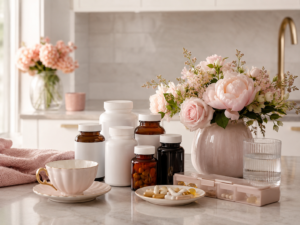
Right now, I take a multivitamin for women over 50, vitamin D, collagen gummies, a plant-based omega supplement, ginkgo, a fiber supplement, a women’s probiotic, sea moss with other ingredients, vitamin B complex, and magnesium glycinate in the evening.

That sounds like a lot, and honestly, it is.

I may change my routine if I find something is not effective, if something does not agree with my body, or if I find combination supplements that allow me to take fewer pills. I prefer gummies, but I am thinking about moving away from gummies and switching more to capsules or tablets. Gummies are convenient, but they can also come with extra sugar, lower doses, or more “cute” than substance. And at this stage, I need results, not candy pretending to have a master’s degree.

Here is what medical experts commonly suggest women over 40 pay attention to, plus what I personally take.

1. Vitamin D

If I had to give up all of my supplements except one, I would probably keep vitamin D.

Vitamin D is important for bone health, immune function, muscle function, and overall wellness. The NIH says adults generally need 600 IU daily through age 70, and 800 IU after age 70. NIH also notes that blood levels of 20 ng/mL or higher are considered adequate for most people, while levels that are too high can cause health problems. (Office of Dietary Supplements)

As an African American woman, I pay special attention to vitamin D. Melanin can reduce the skin’s ability to make vitamin D from sunlight, and I also do not feel like I get enough from my diet. That is one reason vitamin D is so important to me.

I also believe vitamin D helps my body fight against ailments and may help with mood, especially during the winter months. I am not saying it is a cure for depression, because it is not. But I do think having healthy vitamin D levels can support overall health.

I usually take 5,000 IU a day, and some days I take 10,000 IU. I have not had any adverse reactions, and my blood work shows that I am in a healthy range. But this is where I need to be very clear: that is what I do based on my body and my lab results. The general adult upper limit listed by NIH is 4,000 IU per day unless a healthcare provider recommends otherwise, so please do not copy my dosage without talking to your doctor. (Office of Dietary Supplements)

Possible benefits: Bone health, immune support, muscle function, mood support, healthy vitamin D blood levels.

Common expert range: 600–800 IU daily for many adults, though some people may need more based on blood work and doctor guidance. (Office of Dietary Supplements)

My take: Vitamin D is my non-negotiable, but I strongly believe in checking blood levels.

2. A Women’s Multivitamin

Since I will be 50 next year, I have started taking a multivitamin for women over 50.

A multivitamin is not a replacement for eating well, but it can help fill some basic gaps. NIH notes that multivitamin/mineral supplements are widely used, with about one-third of U.S. adults taking one. (Office of Dietary Supplements)

For women over 40 and especially women moving toward 50, I like the idea of a multivitamin that pays attention to vitamin D, B vitamins, calcium, magnesium, zinc, and other nutrients that support aging, bones, energy, and overall health.

One thing to watch: many multivitamins for women over 50 contain little or no iron. That may be appropriate after menopause, but if you still have periods or have low iron, ask your doctor what is best for you. NIH lists the recommended iron intake for women ages 19–50 as 18 mg per day, but 8 mg per day for women 51 and older. (The Nutrition Source)

Possible benefits: Helps fill nutrition gaps, supports overall wellness, may provide age-specific nutrient support.

Common expert range: Follow the label and choose one that does not overload you with megadoses unless your doctor recommends it.

My take: This is my “cover the basics” supplement.

3. Calcium

Calcium is one of the big ones for women as we age because bone health becomes more important. Women are at higher risk of osteoporosis after menopause, and calcium works with vitamin D to support bones.

The Bone Health & Osteoporosis Foundation recommends 1,000 mg of calcium daily for women age 50 and younger and 1,200 mg daily for women age 51 and older, including calcium from food and supplements combined. (Bone Health & Osteoporosis Foundation)

This does not mean everybody needs to take a calcium pill. Some women get enough from food. Dairy, fortified plant milks, leafy greens, canned salmon or sardines with bones, tofu, and fortified foods can all contribute. Calcium supplements can also interact with some medications and may not be appropriate for everyone.

Possible benefits: Bone strength, muscle function, nerve function.

Common expert range: 1,000 mg daily for women 50 and younger; 1,200 mg daily for women 51 and older, from food plus supplements. (Bone Health & Osteoporosis Foundation)

My take: I would rather know how much I am getting from food before adding a separate calcium supplement.

4. Magnesium Glycinate

I take magnesium glycinate in the evening to help me sleep well.

Magnesium is involved in muscle and nerve function, blood sugar regulation, blood pressure regulation, and many other body processes. The recommended daily intake for women is generally 310–320 mg, depending on age, and NIH lists the upper limit for magnesium from supplements as 350 mg per day for adults. (Office of Dietary Supplements)

There are different types of magnesium. Magnesium glycinate is often used by people who want something gentle and calming. Magnesium citrate may help with constipation for some people, but it can also be more likely to send you to the bathroom with urgency. Choose wisely unless you enjoy living dangerously.

Possible benefits: Sleep support, muscle relaxation, nerve function, heart and bone health.

Common expert range: Women generally need 310–320 mg daily total magnesium; supplemental magnesium should usually stay at or below 350 mg unless your doctor advises otherwise. (Office of Dietary Supplements)

My take: I take magnesium glycinate at night because sleep is not optional anymore. At this age, bad sleep can ruin the whole next day.

5. Vitamin B12 and B Complex

I take a vitamin B complex for energy.

B vitamins help the body convert food into energy, and vitamin B12 is especially important for nerve and blood cell health. NIH says adults need 2.4 mcg of vitamin B12 daily. (Office of Dietary Supplements)

As we get older, some people absorb B12 less efficiently. People who eat little or no animal products, take certain acid-reducing medications, or have absorption issues may need extra B12. Harvard Health notes that people who eat a strict vegetarian diet or take a daily acid blocker should consider B12 supplementation. (Harvard Health)

Possible benefits: Energy metabolism, nerve health, red blood cell support, brain function.

Common expert range: 2.4 mcg daily for adults, though many supplements contain more because absorption varies. (Office of Dietary Supplements)

My take: I take B complex for energy support, but I still pay attention to how I feel. If something makes me jittery or off, I rethink it.

6. Omega-3s

I take a plant-based omega supplement. I chose that because I did not want to smell like fish or start having fish burps. That may not sound scientific, but it is real life.

Omega-3 fatty acids support heart, brain, eye, and overall health. The federal Dietary Guidelines recommend adults eat at least 8 ounces of seafood per week, including seafood higher in EPA and DHA. (NCCIH)

For people who do not eat fish or do not want fish oil, plant-based omega supplements may use algae oil. This can be a good option for people who want DHA/EPA without fish. Flax, chia, and walnuts provide ALA, another type of omega-3, but the body does not convert ALA to DHA and EPA very efficiently.

Possible benefits: Heart health, brain health, eye health, inflammation support.

Common expert range: Many omega supplements vary widely, so look at the actual EPA and DHA content, not just “fish oil” or “omega blend” on the front label.

My take: I prefer plant-based omega because I do not want fish burps. That is not vanity. That is quality of life.


7. Fiber Supplement

I take a fiber supplement, and I think fiber is one of those unglamorous things that can make a big difference.

Fiber supports digestion, regularity, blood sugar control, cholesterol levels, and fullness. Mayo Clinic lists the daily fiber recommendation as 25 grams for women age 50 or younger and 21 grams for women older than 50. (Mayo Clinic)

Of course, food should come first when possible. Vegetables, beans, lentils, berries, oats, chia seeds, flaxseeds, and whole grains are great sources. But a supplement can help if you struggle to get enough.

Start slow with fiber. Do not jump from barely any fiber to a full scoop like you are auditioning for a digestive Olympics. Increase gradually and drink plenty of water.

Possible benefits: Digestion, regularity, cholesterol support, blood sugar support, fullness.

Common expert range: 25 grams daily for women 50 and younger; 21 grams daily for women over 50. (Mayo Clinic)

My take: Fiber is not flashy, but it matters.

8. Women’s Probiotic

I definitely take a women’s probiotic.

For me, probiotics are about supporting gut health and vaginal health. And yes, I will say it plainly: I want my gut and my vajayjay healthy. We are grown over here.

Probiotics are live microorganisms that may support the balance of good bacteria in the gut and other areas of the body. NCCIH says probiotic supplements may be useful in some situations, but people should not use probiotics as a reason to delay seeing a healthcare provider. NCCIH also recommends talking with a healthcare provider before taking probiotic supplements, especially if you have health problems. (NCCIH)

Also, the FDA has not approved health claims for probiotics, so be careful with brands that promise too much. (NCCIH)

Possible benefits: Gut health, digestion, vaginal flora support, regularity, immune support.

Common expert range: Probiotic dosages vary by strain and product. Look for CFUs, strain names, expiration date, and whether the product is third-party tested.

My take: I like women’s probiotics, but I do not trust anything that claims it fixes every problem from bloating to bad relationships.

9. Collagen

I have started taking a collagen gummy.

Collagen is popular for skin, hair, nails, joints, and aging support. But this is one area where I want to be honest: the evidence is still evolving. Mayo Clinic says there is not strong evidence that over-the-counter oral or topical collagen supplements reverse aging. (Mayo Clinic News Network)

That does not mean collagen is useless. It means we should keep our expectations reasonable. Collagen may support skin hydration or joint comfort for some people, but it is not going to rewind the clock and have us looking like our high school graduation picture by Friday.

Also, collagen is not plant-based. True collagen comes from animal sources. Some “vegan collagen” products contain nutrients that support collagen production, like vitamin C or amino acids, but they do not contain actual collagen.

Possible benefits: Skin support, joint comfort, hair/nail support, aging support.

Common expert range: Studies on hydrolyzed collagen often use a wide range, commonly several grams per day, but the right amount depends on the product and purpose.

My take: I am trying collagen gummies now, but I may switch forms or stop if I do not notice a benefit.

10. Ginkgo Biloba

I take ginkgo, but this is one I would tell people to be careful with.

Ginkgo is often marketed for memory, focus, and circulation. But research is mixed. Mayo Clinic says research does not support taking ginkgo to prevent or slow dementia or cognitive decline. (Mayo Clinic)

The biggest caution with ginkgo is bleeding risk. NCCIH says ginkgo may increase bleeding risk in people taking anticoagulant medications such as warfarin and may interact with other drugs. (NCCIH)

So this is not one to casually add if you are on blood thinners, aspirin therapy, certain antidepressants, surgery is coming up, or you have any bleeding concerns.

Possible benefits: May support circulation or focus for some people, but evidence is mixed.

Common expert range: Dosages vary widely by product and purpose; check with your doctor or pharmacist first.

My take: I take it, but I would not tell everyone to run out and buy it without checking medication interactions.

11. Sea Moss

I also take sea moss with a bunch of other ingredients.

Sea moss has become very popular, especially in wellness spaces. It may contain iodine, fiber, minerals, and other nutrients, but the quality and nutrient content can vary. Cleveland Clinic notes that sea moss may offer potential benefits for heart, gut, immune, and thyroid health, but also advises checking with a healthcare provider before taking it. One concern is iodine, especially for people with thyroid conditions. (Cleveland Clinic)

Cleveland Clinic also mentions that one study found 4 grams of sea moss per day was typically safe, but people should still check with a healthcare provider before taking it. (Cleveland Clinic)

This is another supplement where I pay attention to how my body responds. Natural does not automatically mean safe. Poison ivy is natural too, and nobody is putting that in a smoothie on purpose.

Possible benefits: May support gut health, mineral intake, iodine levels, and immune health.

Common expert range: Around 4 grams per day has been described as typically safe in one study, but check with your healthcare provider, especially if you have thyroid issues. (Cleveland Clinic)

My take: I take it, but I would be cautious if you have thyroid concerns or take thyroid medication.

12. Iron — Only If You Need It

Iron is important, especially for women who still have periods, have heavy cycles, or have a history of anemia. But iron is not something I believe people should take casually.

Too much iron can be harmful, and many women over 50 do not need extra iron unless their doctor says they do. Harvard’s vitamin and mineral table lists women ages 19–50 as needing 18 mg per day and women 51+ as needing 8 mg per day. (The Nutrition Source)

Possible benefits: Energy, red blood cell production, oxygen transport.

Common expert range: 18 mg daily for women 19–50; 8 mg daily for women 51 and older, unless a doctor recommends otherwise. (The Nutrition Source)

My take: Get blood work before taking iron. This is not one to guess on.

My Current Supplement Routine

Here is what I am currently taking:

  • A women’s multivitamin for women over 50.
  • Vitamin D, usually 5,000 IU daily and some days 10,000 IU, based on my own body and blood work.
  • Collagen gummies.
  • A plant-based omega supplement.
  • Ginkgo.
  • Fiber supplement.
  • Women’s probiotic.
  • Sea moss with other ingredients.
  • Vitamin B complex for energy.
  • Magnesium glycinate in the evening for sleep.
  • Tumeric

Again, this is my routine right now. It may change. If something does not agree with my body, I stop or adjust. If something does not seem effective, I may replace it. If I find a good combination supplement that keeps me from taking so many different things, I may switch.

I am not trying to win an award for most bottles on the counter.

Gummies vs. Capsules: What I’m Thinking Now

I like gummies because they are easy. They feel less intimidating than pills, and they are convenient.

But I am starting to rethink that.

Gummies can be lower in nutrients, higher in sugar, and easier to overtake because they taste good. Some also do not include certain minerals well because minerals can affect taste and texture.

So I think I may start moving more toward capsules, tablets, powders, or liquid supplements when it makes sense. Not because gummies are bad, but because I want to be more intentional.

At this age, “it tastes cute” cannot be the whole wellness plan.

My Biggest Advice for Women Over 40

Before buying a bunch of supplements, get your blood work done.

Ask your doctor about vitamin D, B12, iron/ferritin, thyroid, A1C, cholesterol, kidney function, liver function, and anything else that makes sense based on your health history. Regular checkups help with preventive care and screenings, and your doctor can help you decide which tests are appropriate for you. (CDC)

Also, tell your doctor and pharmacist what supplements you take. This matters because supplements can interact with medications. Ginkgo, magnesium, calcium, iron, omega-3s, and herbal blends can all be an issue depending on your prescriptions and health conditions.

We are not doing secret supplement lives in 2026. Tell the doctor.

Final Thoughts

Women over 40 do not need to panic, but we do need to pay attention.

Our bodies are changing. Our hormones are changing. Our sleep, energy, bones, metabolism, digestion, and mood may need more support than they used to.

For me, supplements are part of my wellness routine, but they are not the whole routine.

  • I still need to eat better.
  • I still need to move my body.
  • I still need to drink water.
  • I still need to lift weights.
  • I still need to sleep.
  • I still need to get blood work.
  • And I still need to listen to my body.

The best vitamin routine is not the one with the most bottles. It is the one that actually supports your body, fits your life, works with your doctor’s guidance, and makes sense for your health goals.

I do what is best for my body, and I encourage you to do the same.

Not what is trendy.

Not what your cousin’s coworker’s neighbor swears cured everything.

What is best for you.

Affiliate Disclosure: This post may contain affiliate links. If you purchase through my links, I may earn a small commission at no extra cost to you. I only share products I personally use, would try, or believe may be helpful to my readers.

Medical Disclaimer: I am not a doctor, nurse, pharmacist, dietitian, or medical professional. This post is for informational and personal-experience purposes only. It is not medical advice. Please talk to your doctor before starting, stopping, or changing any vitamin, supplement, medication, or dosage. I also believe women should have blood work done at least once a year, or as often as their doctor recommends, so they know what their body actually needs.


My Favorite High-Protein Foods and Snacks While Taking a GLP-1 for Weight Loss

Affiliate Disclosure: This post may contain affiliate links. If you purchase through my links, I may earn a small commission at no extra cost to you. I only share products and services that I personally use, would try, or believe may be helpful to my readers.

Losing weight after 40 is not for the weak.

Between hormones, grief, stress, working from home, blood pressure concerns, perimenopause, and a metabolism that clearly did not get the memo, this journey has taught me a lot. And one thing I know for sure is this: if I am going to be on a GLP-1, I cannot just rely on the medicine to do all the work.

The shot may help with appetite, but it does not meal prep for me. It does not lift weights for me. It does not make me drink water. It does not magically build muscle.

That part is still on me.

My weight loss journey did not start with a GLP-1. It actually started with my doctor signing me up for weight loss surgery. I went through the whole process. I took the tests. I attended the nutrition class. I had the sleep study. I was approved for surgery.

Then life happened.

My son passed away, and after that, my mind was not on losing weight. It was not on eating right, working out, drinking water, or taking care of my health the way I needed to. It was on surviving. Grief will do that. It can pull you into a place where health goals feel small compared to just making it through the day.

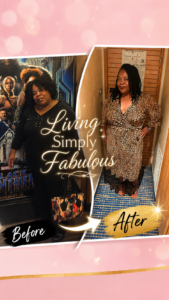
Eventually, I did start a GLP-1. When I began, I was 270 pounds. After being on it for about a year, I got down to 203 pounds.

That was a huge accomplishment. I was proud of myself. I felt better. I looked better. I had hope again.

But then I stopped.

Part of the reason was money. I paid over $1,000 for a couple of months for Mounjaro before I found a compounded option. That kind of cost will make anybody sit down and start doing math like they are balancing the federal budget.

I also stopped because I thought I could do it on my own. I had lost the weight. I thought I had the habits. I thought I could maintain it without the medication.

Well, let’s just say my body had other plans.

After my birthday, I stopped taking it, and I eventually gained back about 25 pounds. I went back to my doctor, and he put me on phentermine. Later, we switched to phentermine and topiramate, which is basically a cheaper alternative to Qsymia when prescribed separately. My insurance would cover the separate medications, so financially, that made more sense.

It worked for a little while. But even with dosage changes, I eventually stalled around 215 pounds. My doctor would not increase the phentermine because of my blood pressure, and honestly, I respected that. Weight loss is important, but so is not playing games with your heart.

I also did not like how topiramate made me feel.

One good thing about being on topiramate, though, is that carbonated drinks started tasting flat to me. So I mostly drink water now. I may have one or two alcoholic drinks or a soda if I go out to a restaurant, but that is probably once a month or less.

No matter how little I ate, the scale would not move past that 215 mark. Looking back, I believe my body was fighting me. I work from home, I am knocking on 50, and I believe perimenopause was absolutely part of the equation.

Hormones can humble you real quick. One minute you are doing “everything right,” and the next minute your body is acting like it is holding a secret meeting you were not invited to.

My doctor eventually suggested going back on a GLP-1, but my insurance would not cover it. I told him I would go back to a compounded version, but he was against it. Then he left my insurance provider, which meant I had to start over from scratch with a new doctor.

During that time, I gained about 15 more pounds.

So I made the decision to go back on a GLP-1, and for now, it is a compounded one.

I currently use Mochi as my GLP-1 provider. If you are interested in checking them out, you can use referral code B6TD7V for $40 off.

I will say this clearly: this is my personal decision, not medical advice. Everybody needs to talk to their own doctor and do their own research. I also believe people need to be careful about where they get any medication from, especially compounded medications.

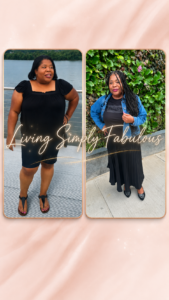
Here is a couple of before and afters (or let’s say in betweens…)

What I Have Learned This Time Around

This time, I am not treating the GLP-1 like a quick fix.

I am treating it like a tool.

I have learned that what works best for me is being active, eating better, lifting weights, drinking water, and increasing my protein.

Protein has become especially important for me because when your appetite is smaller, you have to make your meals count. I cannot just nibble all day and hope for the best. I need to make sure I am getting enough protein to help me stay full, support my muscles, and keep my energy steady.

I am not perfect. I am not eating like a fitness influencer with matching meal prep containers and a ring light pointed at my chicken breast.

I am a real woman, working from home, trying to lose weight, manage my health, and not let perimenopause take me out like a villain in a Lifetime movie.

So here are the high-protein foods, snacks, and simple eating habits that are helping me right now.

1. Premier Protein Almond Milk Shakes

I do not drink Fairlife. I drink the Premier Protein almond milk shakes.

I have tried other plant-based and non-dairy protein shakes, and I hated the taste. One in particular actually made me swell up. I do not know if I was allergic to something in it, because the sodium was not much different from some of the others, but my body clearly said, “Absolutely not.”

The Premier Protein almond milk shakes work better for me. They are easy, convenient, and helpful when I need protein but do not feel like eating a full meal.

On a GLP-1, there are days when I am not very hungry, but I still know I need to get something in my body. A protein shake helps me do that without forcing myself to eat a big meal.

2. Salads with Chicken

I eat salads almost every day.

That may sound boring to some people, but I actually like them. The key is making the salad filling enough so it does not feel like punishment food.

I usually add chicken on top to turn it into a real meal. A plain bowl of lettuce is not going to keep me satisfied. But a good salad with chicken, vegetables, and the right dressing can work.

This is one of my easiest go-to meals while on a GLP-1 because it gives me protein, vegetables, and volume without making me feel overly full.

Sometimes I use grilled chicken, rotisserie chicken, or whatever chicken I already have cooked. I am not trying to complicate this journey more than necessary. The simpler I make it, the more likely I am to stick with it.

3. Salads with Tuna Packets

Tuna packets are another favorite because they are quick, easy, and high in protein.

I can put tuna packets on top of a salad and have lunch without making a big production out of it. That matters when you work from home and still somehow feel like you do not have time to cook.

I like tuna packets because they are easy to keep in the pantry, and they make it harder for me to say, “There’s nothing to eat.”

Because yes, there is. It is just not cake.

Tuna also works when I want something light but still filling. I can add it to a salad, eat it with cucumbers, or have it with a few crackers if I need something quick.

4. Chicken Bowls and Chipotle

I love, love Chipotle.

Real talk: I will probably order it once a week. Down the road, I may limit it more, but right now, I am trying to be realistic.

For me, Chipotle can still fit into my weight loss journey if I make better choices. I can get a bowl or salad with chicken, beans, vegetables, salsa, and skip or reduce the extras that add up quickly.

Is it perfect? No.

Is it better than ordering something greasy and pretending calories do not count because I had a stressful day? Absolutely.

One thing I am learning is that I do not have to make every meal “diet food.” I just need to make better choices more often than not. If I can order something I enjoy and still make protein the star of the meal, that is a win.

5. Greek Yogurt with Blueberries

Blueberries are one of my favorite foods. I could eat them every single day of my life.

Blueberries are not high in protein by themselves, but they pair well with protein foods like Greek yogurt or a protein shake. I like them because they give me something sweet, fresh, and satisfying without making me feel like I am completely off track.

If I want something that feels like a treat, Greek yogurt with blueberries can work well. It gives me protein, sweetness, and something that feels a little more special than just grabbing whatever is in the pantry.

I also like that blueberries are easy. No peeling, chopping, cooking, or fooling around. Just wash them and eat. That is my kind of snack.

6. Granola Bars

I eat granola bars, and they are one of my easy grab-and-go snacks.

Now, not all granola bars are high in protein. Some are basically candy bars wearing hiking boots. So I do try to pay attention to the label and choose ones that make sense for my goals.

Granola bars are convenient when I need something quick, especially if I am out, busy, or just need a small snack. I know there are “cleaner” options out there, but I am also a real person living a real life. Sometimes convenience matters.

For me, the goal is not perfection. The goal is making better choices that I can actually repeat.

7. Protein Bars

Protein bars are helpful when I want something easy and portable.

I do not want to rely on them too much, but they have their place. Sometimes I need something I can throw in my bag, eat between errands, or have when I am not hungry enough for a full meal.

The main thing is checking the sugar, protein, and calories. Some protein bars sound healthy, but once you read the label, you realize they are doing a little too much.

I like having a few protein bars around because they help me avoid skipping food completely. On a GLP-1, I may not always feel hungry, but that does not mean my body does not need fuel.

8. Pork Rinds and Other Crunchy Snacks

Sometimes I want crunch.

Not everything can be soft foods, shakes, and salads. Sometimes I want something salty and snacky. That is where pork rinds can come in.

Pork rinds are not something I would call a health food, but they can be a low-carb crunchy snack when I want something salty and satisfying. As with anything, I try not to overdo it, because sodium can add up quickly, especially with blood pressure concerns.

I also sometimes look for other high-protein crunchy snacks, but I have to be honest: taste matters. I am not going to keep eating something that tastes like seasoned cardboard just because the label says it is healthy.

That is where a lot of “diet food” loses me. I need my food to work for my goals, but it still has to taste like food.

9. Bananas

Bananas are not high in protein, but they are part of my routine, so I want to mention them.

I mostly eat bananas because of the potassium. My blood pressure medicine can deplete potassium, so bananas are one of the foods I keep in rotation.

This is one of those things where I have to think about my whole health, not just weight loss. I am not just trying to be smaller. I am trying to be healthier.

And that means paying attention to what my body needs.

Sometimes we get so focused on calories, carbs, protein, and the scale that we forget our body is a whole system. Blood pressure matters. Energy matters. Digestion matters. Strength matters. How we feel matters.

10. Coffee, Tea, and Water

This is not a high-protein food, but it is a big part of my routine, so I am including it.

I drink coffee and tea every day with two packets of stevia. If I do not have stevia, I do not sweeten it. I am not adding five different syrups, whipped cream, caramel drizzle, and calling it coffee. At that point, ma’am, that is dessert with caffeine.

I also drink water all day, every day.

This has probably been one of the biggest habits that helps me. I still enjoy myself when I go out to eat, but most days, I am drinking water, coffee, and tea.

One good thing that came out of my time on topiramate is that carbonated drinks started tasting flat. That helped me let go of soda more than I probably would have on my own.

Now, I mostly drink water. If I go out to a restaurant, I may have one or two alcoholic drinks or a soda, but that is probably once a month or even less.

Foods I Know Are High Protein, But I Personally Do Not Eat

I want to be honest with my readers: there are some high-protein foods that people always recommend that I personally do not eat.

I do not eat eggs.

I do not eat cottage cheese.

Both can be great high-protein options for people who like them. They are affordable, easy, and popular in weight loss meal plans. But they are not part of my personal routine, and I am not going to sit here and pretend I am meal prepping boiled eggs and cottage cheese bowls when I am not.

That is the thing about this journey. You have to find foods that actually work for you.

Not the imaginary version of you.

The real you.

Because the imaginary version of me might eat boiled eggs, cottage cheese, and plain grilled fish every day.

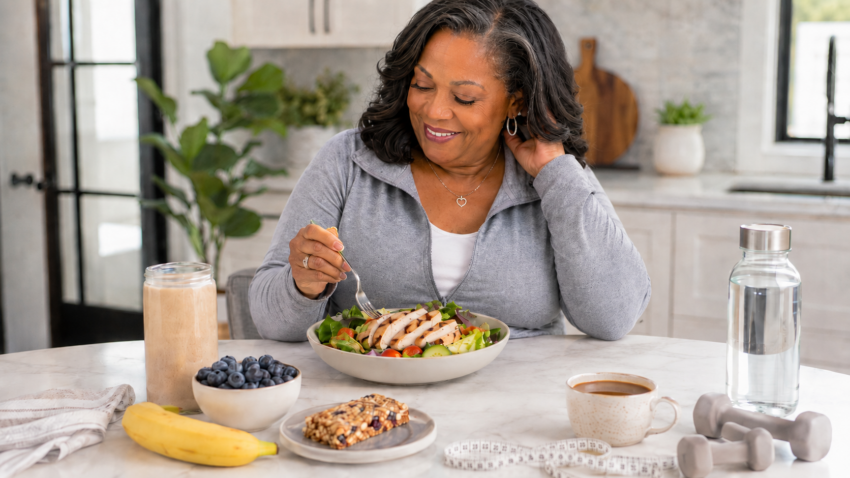
The real me is over here with tuna packets, chicken salads, protein shakes, blueberries, Chipotle, and stevia in my coffee.

And honestly, that is okay.

My Simple GLP-1 Food Rule

Right now, I try to ask myself:

Where is my protein coming from?

That question helps me make better choices.

If I am having a salad, I add chicken or tuna.

If I need something quick, I reach for a protein shake.

If I want something sweet, I may pair blueberries with Greek yogurt.

If I order Chipotle, I try to build the meal around protein and not let every topping jump into the bowl like it paid rent.

I am not perfect, but I am more intentional now.

And honestly, that is progress.

What I Am Doing Differently This Time

This time, I am not just trying to lose weight.

I am trying to build a lifestyle I can maintain.

I work from home, so I have to fight a sedentary lifestyle. I am almost 50, so I know menopause is coming whether I invite it or not. I also know my body does not respond the way it did when I was younger.

That means I have to be more intentional.

I need to move more.

I need to lift weights.

I need to eat enough protein.

I need to drink water.

I need to stop acting like “barely eating” is the same as being healthy.

Because it is not.

When I was stalled at 215 pounds, I kept thinking, “How can I be eating this little and not losing weight?” But I am learning that eating very little is not the same as nourishing my body. My body still needs protein, strength, movement, and consistency.

I am also learning that my habits have to match this stage of life. What worked in my 30s may not work now. I cannot ignore perimenopause, hormones, stress, grief, blood pressure, or the fact that I spend a lot of time sitting because I work from home.

I have to work with my real life, not some fantasy schedule where I wake up at 5 a.m., meditate, make a perfect breakfast, walk five miles, and prepare salmon in a glass container before sunrise.

That sounds lovely.

That is also not my current ministry.

A Simple Day of Eating for Me on a GLP-1

Every day is not the same, but a realistic day may look something like this:

Coffee or tea with two packets of stevia.

A Premier Protein almond milk shake if I am not very hungry.

A salad with chicken or tuna for lunch.

Blueberries or a granola bar as a snack.

A chicken bowl, another salad, or Chipotle for dinner.

Water all day.

Is it perfect? No.

But it is realistic. And realistic is what keeps me from quitting.

Final Thoughts

If you are on a GLP-1 or thinking about starting one, please know this: you are not lazy, and you are not cheating.

Weight loss is complicated. Hormones, grief, stress, medication, age, lifestyle, sleep, and health conditions can all play a role.

But also know this: the medication is not the whole plan.

You still need to learn what foods work for your body. You still need protein. You still need water. You still need movement. You still need strength training. You still need habits you can live with when life gets hard.

For me, this journey has not been straight.

I have lost weight, gained weight, restarted, stalled, changed medications, changed doctors, and had to learn some things the hard way.

But I am still here.

And I am still choosing myself.

Sometimes the win is not just the number on the scale.

Sometimes the win is deciding, again and again, that you are worth taking care of.

Helpful Links Mentioned in This Post

Mochi GLP-1 Provider: https://joinmochi.com
Use referral code B6TD7V for $40 off.

Premier Protein Almond Milk Shakes: https://amzn.to/49MwMhK

Tuna Packets: https://amzn.to/4dXA8ky

Granola Bars: https://amzn.to/3PEc4d1

Pork Rinds: https://amzn.to/4wS50KT

Bold Casual on a Budget: The Streetwear Outfit That Actually Looks Styled

Most casual outfits read as “thrown together.” This one reads as styled — and that’s a deliberate difference.

The trick isn’t owning expensive pieces; it’s knowing how to make affordable ones look intentional.

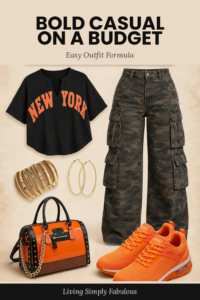
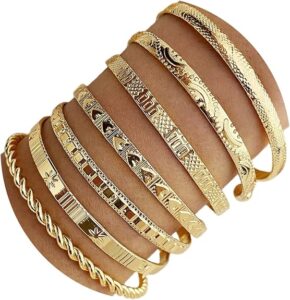
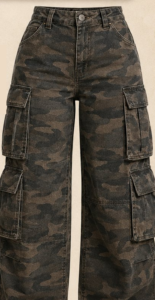
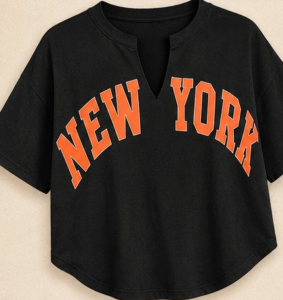
Pinterest collage showing a bold casual outfit with camo cargo pants, black New York graphic tee, orange sneakers, orange handbag, gold hoops, and gold banglesThis is a sporty, confident, attention-getting look that still feels put together. Perfect for weekends,
errands you want to look cute for, or anywhere you want to stand out without overdressing.

Here’s how to pull it all together with six key pieces that do all the heavy lifting.

The Formula

 Bold Casual on a Budget: The Streetwear Outfit That Actually Looks Styled

1. Camo Cargo Pants

Wide-leg cargos are the new statement pants. The camo print does the work of being interesting so the rest
of the outfit can stay simple, and the loose silhouette balances out the cropped top. Avoid skinny camo —
it dates the look immediately.

Black cropped New York graphic tee with orange lettering

2. Black “New York” Graphic Tee

City-name graphic tees are having a major moment. The black base keeps it grounded, while the orange lettering
ties directly into your bag and shoes. Cropped or boxy fits photograph way better than baggy ones.

Save the full outfit formula

Bright orange athletic sneakers with white sole detail

3. Bright Orange Sneakers

A pop of unexpected color in your sneakers is the easiest way to take an outfit from “fine” to “memorable.” Orange specifically
photographs incredibly well and feels fresh, not cliché like a pop of red would.

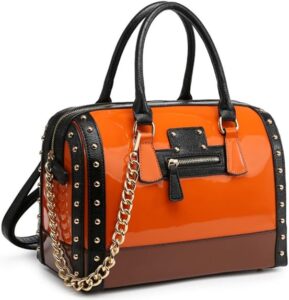
Orange and black structured handbag with gold chain detail

4. Orange and Black Handbag

This is where the magic happens — the bag matches the shoes and ties back to the tee’s lettering.
Repeating a color in two or three places is what makes an outfit look styled instead of random.
Same trick the pros use; just with affordable pieces.

One bold color, repeated with intention.

The orange works because it appears in the tee, sneakers, and handbag — enough to feel styled, but not so much
that the outfit becomes overwhelming.

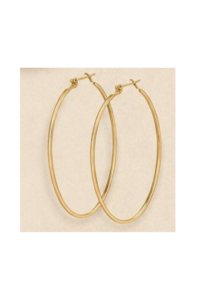
Gold hoop earrings

5. Chunky Gold Hoops

Streetwear can read sloppy if you don’t add something polished. Gold hoops are the easiest way to elevate any
casual look — they signal that you put thought into the outfit.

6. Gold Bangles

Layered bangles add movement and warmth, and they keep the look from feeling too monochrome.
The gold also pulls the orange tones forward so the whole outfit reads cohesive.

A Note on the Orange

If double orange feels like too much, you’ve got options — keep the orange shoes and swap the bag for a structured
black one, or keep the orange bag and switch to white sneakers. The goal is to have one unexpected pop of color,
not five. Too many bold pieces compete with each other; one well-placed pop is what looks expensive.

Why This Works

The formula here is the same one stylists use for street-style photos: one bold pattern, one repeated accent color,
one neutral anchor, and metallic accessories to elevate the whole thing. It’s intentional, it’s photographable,
and it doesn’t look like you tried too hard — which is the entire point.

This post contains affiliate links. If you purchase through them, I may earn a small commission at no extra cost

to you — it helps keep this little corner of the internet running. Thank you!

Simple Luxury Style Over 40

Simple luxury style over 40 is not about chasing every trend or pretending to be someone you are not. It is about looking polished, modern, and put together in a way that fits your real life, your body, your budget, and your confidence. In 2026, fashion is leaning into elevated basics, soft structure, rich textures, and smart statement pieces that make getting dressed feel easier—not exhausting.

The good news? You do not need a brand-new wardrobe to look current. You just need a few thoughtful updates that make your everyday outfits feel more intentional, more grown, and a little more fabulous.

1. Start with one statement, not five

The easiest way to look current in 2026 without looking try-hard is to let one item do the heavy lifting. That could be a metallic loafer, a polished cropped jacket, a bold cuff bracelet, or a faux-fur trimmed coat in winter. One statement piece signals intention. Five statement pieces signal confusion. Mature style looks best when the eye can rest on one focal point and enjoy everything else as support.

2. Use texture to make basics look expensive

If you want simple luxury without a luxury price tag, texture is your best friend. Rib knits, satin blouses, pleated skirts, brushed suede-look pieces, woven bags, quilted jackets, matte leather belts, and soft boucle cardigans all create visual interest even when the color palette stays neutral. This is good news for women who love black, cream, camel, olive, navy, and chocolate because you do not need to abandon your neutrals to look current.

3. Build a modern column outfit

Column dressing sounds fancy, but it is simply wearing one color family from shoulder to shoe so your silhouette looks long, calm, and intentional. Think black sweater, black trousers, black boots. Or camel knit, tan trousers, nude shoe. Or cream top, ivory jeans, bone flat. The beauty of this formula is that it works for every body type, every budget, and almost every schedule.

4. Structured knitwear is the grown-woman cheat code

The reason structured knitwear is winning right now is simple: it gives polish without punishment. A knit blazer, sweater jacket, or elevated cardigan keeps the softness women want while adding the shape they need. It is easier to wear than a stiff blazer and more refined than a hoodie. For women balancing work, errands, travel, and social plans, that matters.

5. Upgrade your accessories before your whole closet

The cheapest way to look like you updated your wardrobe is often to update your accessories first. A fresh belt, metallic flat, sleek sneaker, wider cuff bracelet, oversized scarf, or modern handbag can turn last year’s basics into this year’s outfit. That matters when you do not want to burn money for sport. And let us be honest, most women do not need a new closet every season. They need better finishing touches.

6. Dress for your real life, not your fantasy life

One of the biggest mistakes women make when rebuilding their style is shopping for a life they do not actually live. They buy dramatic heels for events they never attend, fitted blazers for offices they no longer work in, or trendy pieces that photograph well but feel awkward in motion. Style gets easier when you tell the truth. What does your week actually look like? How do you spend your money? Where do you go? What do you need your clothing to do?

7. Soft power dressing belongs in your closet

Power dressing in 2026 is not all shoulder pads and intimidation. It is softer, smarter, and more feminine. Think relaxed trousers, fluid suiting, sleeveless vests, elegant monochrome sets, and blazers with less stiffness. This trend works beautifully for women in midlife because it communicates confidence without trying to cosplay corporate aggression.

8. What to skip if you want simple luxury

Simple luxury is not about being plain, but it does reject mess. Skip anything that looks obviously synthetic and scratchy, hardware that looks cheap and overly shiny, complicated shoes you cannot walk in, tiny bags that hold nothing, and trend pieces so loud they age out in six weeks. Also skip the habit of buying because something is on sale. A bad bargain is still a waste of money.

Budget-friendly action plan

If you want your readers to feel immediate momentum, give them a short action plan they can complete this week instead of someday. That might mean setting a category budget, choosing one room to refresh, picking one wellness ritual to repeat, or identifying one income stream to test. Action beats vague motivation every time.


A simple plan works better than a dramatic overhaul:

1. Review what you already have.

2. Identify the real gap.

3. Spend only where the result will be noticeable or useful.

4. Build a repeatable rhythm around the habit or system.

5. Reassess after thirty days instead of making emotional decisions after three.

What to avoid

The biggest mistake women make in this area is confusing aspiration with execution. They know what looks good, sounds good, or seems impressive online, but they do not always translate that into something sustainable in real life. That gap between aspiration and execution is where money gets wasted and routines fall apart.

Avoid the trap of buying everything at once. Avoid the trap of waiting for perfect conditions. Avoid the trap of trying to prove something to strangers. And absolutely avoid the trap of assuming expensive automatically means better. Sometimes it does. Often it does not. A better question is whether the purchase or habit creates a visible, useful, repeatable upgrade in daily life.


25 Best Gifts for Teen Girls

Finding the perfect gift for a teen girl can feel like navigating a maze. Trust me, I get it! Teens have their own unique tastes, and what’s cool today might be so last week tomorrow. But don’t worry—I’ve done the legwork for you and rounded up 25 amazing gifts that are sure to impress even the pickiest teen. Whether she’s into tech, fashion, beauty, or just chilling in style, there’s something here for every personality. Plus, all these items are available on Amazon, so you can shop from the comfort of your couch. Let’s dive in!

Tech & Gadgets

  1. Fujifilm Instax Mini 12 Camera
    Teens love capturing memories, and this instant camera is a hit! It’s compact, easy to use, and comes in fun colors. Perfect for her next hangout or road trip.
    Order Fujifilm Camera Here
  2. Wireless Earbuds
    Upgrade her listening experience with a pair of sleek wireless earbuds. The Soundcore by Anker Space A40 offers great sound quality and noise cancellation.
  3. LED Ring Light with Tripod
    For the aspiring influencer or selfie queen, this ring light is a game-changer. It’s adjustable and comes with a phone holder—ideal for TikTok videos or Zoom calls.
  4. Kindle Paperwhite
    If she’s a bookworm, she’ll adore this waterproof Kindle. It’s lightweight, easy on the eyes, and holds thousands of books.
  5. Portable Charger Power Bank
    Never let her phone die again! This compact power bank is a lifesaver for teens always on the go.

Beauty & Self-Care

  1. Glow Recipe Watermelon Glow Niacinamide Dew Drops
    Skincare is huge with teens, and this cult-favorite serum gives a radiant glow. Plus, it smells amazing!
  2. Makeup Organizer
    Help her keep her vanity clutter-free with a chic acrylic makeup organizer.
  3. Hair Straightener Brush
    This 2-in-1 tool straightens and smooths hair in minutes. Perfect for quick morning routines.
  4. Sheet Mask Variety Pack
    A fun way to pamper herself! This pack includes hydrating, brightening, and soothing masks.
  5. Sephora Favorites Beauty Bags
    These curated sets are a great way to let her try out high-end beauty products without breaking the bank.

Fashion & Accessories

  1. Mini Backpack Purse
    Stylish and practical, this mini backpack is perfect for carrying her essentials.
  2. Personalized Jewelry
    A dainty necklace or bracelet with her initials or birthstone adds a special touch.
  3. Comfy Oversized Hoodie
    Because you can never have too many cozy hoodies! Bonus points if it’s from her favorite brand.
  4. Trendy Sneakers
    Think colorful or platform sneakers—comfortable yet stylish for everyday wear.
  5. Cute Socks Pack
    From animal prints to quirky patterns, these socks are a fun and affordable gift.

Room Decor & Lifestyle

  1. LED Strip Lights
    Transform her room into a cozy oasis with these customizable LED lights.
  2. Fuzzy Throw Blanket
    Soft, warm, and Instagram-worthy—this blanket is a must-have for her bed or couch.
  3. Bullet Journal Kit
    For the creative teen, a bullet journal kit with stickers, washi tape, and markers is a thoughtful gift.
  4. Aromatherapy Diffuser
    Help her create a calming atmosphere with this essential oil diffuser.
  5. Photo Collage Kit
    Let her display her favorite memories with this DIY photo collage kit.

Fun & Unique Gifts

  1. Custom Star Map
    A personalized star map of a special date (like her birthday) makes for a sentimental and unique gift.
  2. Polaroid Photo Album
    If she has an instant camera, this adorable photo album is the perfect way to store her prints.
  3. DIY Candle Making Kit
    A fun and creative activity that results in a beautiful, custom candle.
  4. PopSocket Swappable Grip
    Let her customize her phone with a trendy PopSocket. There are tons of designs to choose from!
  5. Adulting 101 Journal
    This humorous and practical journal is perfect for teens navigating life’s little challenges.

Final Thoughts

There you have it—25 gifts that are sure to make any teen girl smile. Whether she’s into beauty, tech, or just loves a good cozy vibe, there’s something on this list for everyone. And the best part? You can snag all of these goodies on Amazon with just a few clicks.

Don’t forget to check back at Living Simply Fabulous for more gift guides, lifestyle tips, and fabulous finds. Happy shopping!

16 Real Work From Home Jobs

The global workforce has seen a dramatic shift towards remote work, especially since the onset of the COVID-19 pandemic. This transition has opened up numerous opportunities for individuals looking to work from the comfort of their homes. If you’re looking to ditch the commute and find a job that allows you to work remotely, here are 16 real work-from-home jobs that you can consider.

1. Virtual Assistant

Virtual assistants provide administrative support to businesses, entrepreneurs, and executives from a remote location. Tasks may include managing emails, scheduling appointments, handling customer inquiries, and more. Sites like Upwork and FlexJobs are great places to start looking for virtual assistant jobs.

2. Freelance Writer

If you have a knack for writing, freelance writing could be a lucrative option. Freelance writers create content for blogs, magazines, online publications, and businesses. This role offers flexibility in terms of hours and the ability to work from anywhere. Websites like Freelancer and ProBlogger Job Board are popular platforms to find writing gigs.

3. Online Tutor

With the rise of e-learning, online tutoring has become more popular. Tutors are needed for all age groups and subjects. You can work as an independent tutor or join platforms like Tutor.com or Outschool, where you can teach subjects you are passionate about to students from around the world.

4. Web Developer

Web developers create and maintain websites and are in high demand as more businesses go online. This job requires coding skills in languages such as HTML, CSS, and JavaScript. Web developers can find freelance opportunities on sites like GitHub Jobs or Stack Overflow.

5. Graphic Designer

Graphic designers create visual concepts to communicate ideas that inspire, inform, or captivate consumers. With businesses needing logos, advertisements, and other marketing materials, graphic designers can find a plethora of freelance jobs on platforms like 99designs or Behance.

6. Social Media Manager

Social media managers develop strategies, produce content, and manage all social media activities to increase visibility and engagement for a brand. This role is perfect for those who are social media savvy and creative. LinkedIn and Indeed often list remote opportunities for social media managers.

7. Data Entry Specialist

Data entry jobs require strong keyboarding skills and precision, and they often don’t require extensive training beyond high school. These roles can be found on sites like Axion Data Entry Services or Clickworker.

8. SEO Consultant

If you have experience with search engine optimization, working as an SEO consultant can be very rewarding. Businesses seek SEO experts to improve their Google search rankings. SEO consultancy can be done as a freelance service or through agencies.

9. Customer Service Representative

Many companies hire customer service representatives to handle customer inquiries via phone, email, or live chat. Companies like LiveOps and Arise offer remote customer service jobs that allow you to work from home.

10. Online Sales Representative

Online sales positions involve selling products or services, managing client accounts, and processing orders. These positions often offer base pay plus commission. Sites like Indeed and Glassdoor can be useful for finding jobs in this field.

11. Transcriptionist

Transcriptionists convert audio recordings into written documents. The work requires excellent listening and typing skills. General, medical, and legal transcription can be good avenues to explore. Companies like Rev or TranscribeMe offer flexible, work-from-home transcription jobs.

12. Translator

If you are fluent in more than one language, consider working as a translator. Translators convert written materials from one language to another and are crucial in global communications. Freelance platforms and companies like WorldLingo or Translator’s Base provide opportunities for translators.

13. Blogger

Blogging can be a fulfilling and potentially profitable career. You can start a blog on a topic you are passionate about, grow your audience, and monetize your site through advertising, sponsored posts, or merchandise.

14. E-commerce Store Owner

Starting an online store on platforms like Mercari, Shopify or Etsy allows you to sell products directly to customers around the world. This role requires marketing, customer service, and management skills, but it provides great flexibility and potential for significant profits.

15. Affiliate Marketer

As an affiliate marketer, you earn a commission by promoting other people’s products. You can use your website, blog, or social media platforms to place affiliate links and earn money whenever someone makes a purchase through your link.

16. Consultant

If you have expertise in a particular field, such as marketing, finance, or IT, you can start your own consulting business. Consultants provide advice to businesses and help them improve their performance. Networking and LinkedIn can be great tools to get started in consultancy.

Conclusion

Working from home offers numerous benefits, including flexibility, savings on commuting costs, and the ability to design a comfortable work environment. Whether you are looking for full-time employment or freelance opportunities, the internet has opened up a world of possibilities for remote work. Explore these 16 career paths to find the one that fits your skills and lifestyle best.

How to Watch TV Without Cable in 2025: A Comprehensive Guide

In 2025, saying goodbye to traditional cable TV doesn’t mean you have to give up watching your favorite shows and movies. The landscape of television consumption has dramatically shifted towards streaming, offering a multitude of options that cater to every taste and budget. Whether you’re a sports fanatic, a news junkie, or a binge-watcher of series and films, there’s a solution out there for you. In this comprehensive guide, we’ll explore the various ways you can enjoy TV without the hefty cable subscription, detailing each option along with associated costs.

1. Streaming Services

Streaming services are the frontrunners in the post-cable TV era, offering extensive libraries of TV shows, movies, documentaries, and exclusive content. Here are some of the top players:

a. Netflix

  • Cost: Plans range from $9.99 to $19.99 per month.
  • Offerings: Wide variety of movies, TV shows, documentaries, and an increasing number of exclusive titles known as Netflix Originals.
  • Device Compatibility: Available on virtually any internet-connected device.

b. Amazon Prime Video

  • Cost: Included with Amazon Prime membership at $139 per year or $14.99 per month.
  • Offerings: Includes movies, TV shows, and Amazon Originals. Prime membership also offers additional benefits like free shipping, music streaming, and more.
  • Device Compatibility: Can be streamed on various devices including smart TVs, smartphones, tablets, and game consoles.

c. Hulu

  • Cost: Ranges from $7.99 per month for the basic plan with ads to $14.99 per month for the ad-free version.
  • Offerings: Strong selection of current TV shows from major networks, available a day or week after airing, plus original programming.
  • Device Compatibility: Supports a wide range of devices similar to other streaming services.

d. Disney+

  • Cost: $7.99 per month or $79.99 per year.
  • Offerings: Focuses on films and TV shows from Disney, Pixar, Marvel, Star Wars, and National Geographic.
  • Device Compatibility: Available on tablets, smartphones, smart TVs, and PCs.

e. HBO Max

  • Cost: $14.99 per month.
  • Offerings: Includes all HBO content, plus additional movies, shows from networks like Warner Bros, New Line Cinema, DC, CNN, TNT, TBS, truTV, Cartoon Network, and more.
  • Device Compatibility: Available across many platforms, including desktop, mobile devices, and smart TVs.

2. Live TV Streaming Services

For those who want to replicate the cable experience without the contract, live TV streaming services offer a great alternative:

a. YouTube TV

  • Cost: $64.99 per month.
  • Offerings: Offers over 85 channels of sports, news, and entertainment, local network broadcasts, and a cloud DVR with no storage limits.
  • Device Compatibility: Streams on phones, tablets, computers, and TVs via media players.

b. Hulu + Live TV

  • Cost: Starts at $69.99 per month, which also includes access to the Hulu on-demand library.
  • Offerings: Features over 75 channels, live and on-demand TV, from local channels to cable essentials like ESPN, CNN, and FX.
  • Device Compatibility: Compatible with iOS, Android, Apple TV, Fire TV, and more.

c. Sling TV

  • Cost: Plans start at $35 per month.
  • Offerings: Customizable channel lineup with options for ESPN, CNN, AMC, and more, depending on the package.
  • Device Compatibility: Available on most streaming devices, including mobile, tablets, and smart TVs.

d. Philo

  • Cost: $25 per month.
  • Offerings: Focuses on entertainment channels like AMC, A&E, MTV, and Nickelodeon, with over 60 channels available.
  • Device Compatibility: Streams on Roku, Apple TV, Amazon Fire TV, and Android TV.

3. Free Streaming Services

For those on a tight budget, free streaming services can be a viable option:

a. Pluto TV

  • Cost: Free.
  • Offerings: Offers a mix of live and on-demand content, with channels structured similarly to cable TV.
  • Device Compatibility: Available on most streaming devices including smartphones and smart TVs.

b. Tubi

  • Cost: Free.
  • Offerings: Hosts a large selection of movies and TV shows with commercial breaks.
  • Device Compatibility: Can be accessed on most smart TVs, streaming devices, and mobile devices.

c. Crackle

  • Cost: Free.
  • Offerings: Offers a variety of movies, TV shows, and original programming, supported by ads.
  • Device Compatibility: Available on all major streaming platforms.

d. IMDb TV

  • Cost: Free.
  • Offerings: Provides a range of movies, TV shows, and a few original series with ad support.
  • Device Compatibility: Available on Amazon Fire devices, smart TVs, streaming media players, and mobile devices.

e. Peacock Free

  • Cost: Free.
  • Offerings: Offers a limited selection of movies, classic shows, and original programming. Peacock also includes some live sports and popular NBC shows a week after they air.
  • Device Compatibility: Works on computers, mobile devices, tablets, smart TVs, and gaming consoles.

f. The Roku Channel

  • Cost: Free.
  • Offerings: Features live and on-demand movies, TV shows, and news updates, along with children’s programming. The service includes content licensed from studios and also original content produced by Roku.
  • Device Compatibility: Available on Roku streaming devices, the web, and as an app on select smart TVs and mobile devices.

g. Xumo

  • Cost: Free.
  • Offerings: Delivers live and on-demand streaming with a focus on news, sports, and entertainment. Xumo curates its content from different sources and offers a cable-like experience with channels and guide-based navigation.
  • Device Compatibility: Compatible with iOS, Android, smart TVs, and streaming devices.

h. Plex

  • Cost: Free; offers optional premium subscriptions.
  • Offerings: Beyond organizing your personal media collections, Plex provides free access to thousands of movies and TV shows across genres. The platform has also added live TV features with over 80 channels.
  • Device Compatibility: Available on a wide range of devices including PCs, smartphones, tablets, smart TVs, and more.

i. Kanopy

  • Cost: Free with a library card or university login.
  • Offerings: Known for its collection of critically acclaimed films, documentaries, and educational content. Kanopy is an ad-free experience that partners with libraries and universities to provide high-quality content.
  • Device Compatibility: Streams on mobile devices, tablets, PCs, and smart TVs.

j. PBS Video App

  • Cost: Free.
  • Offerings: Offers free access to a wide range of PBS content, including popular series like “Frontline,” “Nova,” and “Masterpiece.” Viewers can watch national and local shows after they air.
  • Device Compatibility: Available on iOS, Android, Amazon Fire TV, Roku, and smart TVs.

k. Crunchyroll

  • Cost: Free with ads; premium subscriptions available.
  • Offerings: Specializes in Japanese anime and dramas. It is a go-to platform for anime enthusiasts looking to stream shows just hours after they air in Japan.
  • Device Compatibility: Compatible with most devices, including game consoles, streaming devices, mobile phones, and tablets.

l. NewsON

  • Cost: Free.
  • Offerings: Provides live and on-demand local newscasts from over 275 local news stations across the United States.
  • Device Compatibility: Available on iOS, Android, Roku, and via the web.

m. Stirr

  • Cost: Free.
  • Offerings: An ad-supported streaming service that offers live local news, TV shows, movies, sports, and lifestyle content.
  • Device Compatibility: Accessible on iOS, Android, Amazon Fire TV, Apple TV, and Roku devices.

These additional free options further expand your choices for accessing a wide variety of content without a monthly fee. With these platforms, you can enjoy everything from local news and live sports to premier movies and specialized content like anime, all supported by ads but at no additional cost to you. This broad selection ensures that viewers can tailor their entertainment options to their interests while managing their budgets effectively.

4. Digital Antennas

For those who prefer traditional broadcasting, a digital antenna is an excellent way to access high-definition TV over the air, completely free.

  • Cost: One-time purchase of the antenna, typically between $20 and $50.
  • Offerings: Access to local channels such as ABC, CBS, NBC, and Fox, depending on location.
  • Device Compatibility: Connects directly to your TV.

5. Combining Services

Many viewers choose to combine services to tailor their viewing experience to their specific needs. For example, subscribing to Netflix for movies and series, Hulu for next-day access to network shows, and an occasional month of HBO Max for premium content can provide a comprehensive viewing package.

Conclusion

In 2025, the options for watching TV without cable are more varied and accessible than ever. Whether you’re interested in catching up on the latest series, watching live sports, or just keeping up with the news, there’s a solution tailored to meet your needs and budget. By understanding the available services, you can make an informed decision that maximizes your entertainment value without the need for a traditional cable subscription.

25 Side Hustles That Can Turn Into Full-Time Careers

Are you dreaming of ditching the 9-to-5 grind and becoming your own boss? Well, grab your coffee, and let’s explore 25 side hustles that might just lead you to handing in that resignation letter and turning your side gig into a full-time love affair—with work, of course!

1. Freelance Writing

If you have a way with words, freelance writing can be a lucrative field. Start by writing blog posts, articles, or even ghostwriting books. Platforms like Upwork and Contently can help you find your first clients. Remember, every word you write could be a step towards your new career!

2. Graphic Design

Got a knack for design? Companies constantly need graphic work, from logos to website banners. Websites like 99Designs and Behance showcase your work and connect with potential clients. Who knows? What starts as a logo could end up as a brand empire!

3. Web Development

If you can code, you can make bank. Start small with local businesses that need website help and gradually build up your portfolio. Platforms like GitHub can be a great place to showcase your work and snag some tech-savvy clients.

4. Social Media Management

Almost every business needs a social media presence. If you can tweet, pin, and share with the best, consider offering your services to small businesses. Tools like Hootsuite and Buffer can help you manage multiple accounts like a pro.

5. Photography

Turn your passion for photography into a career by shooting weddings, portraits, or even selling your photos to stock websites like Shutterstock or Getty Images. A picture is worth a thousand words and potentially a thousand dollars!

6. Personal Training

If you live and breathe gym air, get certified and start offering personal training sessions. Apps like Trainerize can help you manage clients and workouts. This side hustle can really pump up your income!

7. Tutoring

Expert in a subject? Tutor students in your area or online via platforms like Tutor.com or Wyzant. Your knowledge can open doors—both for your students and for your career.

8. E-commerce Seller

Start selling on eBay, Etsy, Amazon, or Mercari. Whether it’s vintage clothing or handmade crafts, there’s a market for almost everything. Success stories abound of people turning their eBay side gigs into full-time businesses!

9. Real Estate Investing

If you have some capital to start with, consider buying property to rent or flip. Websites like BiggerPockets offer great resources and community support to get you started on your mogul path.

10. App Development

Got an idea for an app? Learn to develop it or hire a developer. With millions of apps downloaded daily, yours could be the next big hit.

11. Affiliate Marketing

Start a blog or YouTube channel, and promote products you love. Sites like Amazon Affiliate Program can help you earn a commission without stocking products.

12. Virtual Assistant

Organized and efficient? Offer your services as a virtual assistant. Platforms like Zirtual or BELAY can connect you with executives who need help managing their day.

13. Dog Walking/Pet Sitting

If you’re an animal lover, this could be a dream job. Apps like Rover make it easy to connect with pet owners who need a helping hand.

14. Consulting

Expert in your field? Start a consulting firm. Whether it’s marketing, management, or environmental consulting, your expertise is valuable.

If you’re interested in starting your own blog, Hostgator is a great hosting provider. Get up to 70% off your next website.

15. Craft Maker

Turn your hobby into a paycheck. Sell your crafts on Etsy or at local craft fairs. Vendoo is a great tool for online sellers and resellers.

16. Music Lessons

Play an instrument? Teach others how to play, and you could find yourself conducting your way to a full-time job.

17. Food Truck Owner

Love cooking? Start a food truck—it’s a restaurant on wheels! With the right menu, you could be the culinary king or queen of the streets.

18. Translation Services

Fluent in another language? Offer translation services. Websites like ProZ.com can connect you with clients globally.

19. Copyediting

Have an eye for detail? Editors are in demand for books, articles, and more. Sites like Scribendi can be a good place to start looking for gigs.

20. Landscaping Services

Got a green thumb? Start a landscaping business. It’s not just about mowing lawns—you could design garden layouts and more.

21. Event Planning

Love organizing parties? Turn your passion into a profession by starting an event planning business.

22. Handmade Beauty Products

Create and sell your own beauty products, from soaps to lotions. Ensure you comply with local regulations to make this a smooth operation.

23. Online Courses

Have a teachable skill? Create an online course and sell it on platforms like Udemy or Teachable.

24. Voiceover Work

Got a voice that can make people listen? Offer voiceover services for commercials, animated films, or audiobooks.

25. YouTube Channel

Start a channel about anything you love—cooking, gaming, fashion, you name it. With persistence, YouTube can turn from a hobby into a hefty paycheck. Channels mostly make money from Google Adsense, however, affiliate marketing, selling products, and services can help you to monetize your channel.

Each of these side hustles has the potential to replace your day job if you’re willing to put in the effort. Remember, the best career path is one you’re passionate about—so choose a side hustle that sparks joy, not just extra cash! And who knows? With a bit of luck and a lot of hard work, you might just find yourself turning what you love into what you do full-time. Happy hustling!

47 of the Best Tips to an Organized Home: Room by Room

Creating an organized home goes beyond mere aesthetics. It’s about crafting an environment that fosters efficiency, reduces stress, and boosts your overall well-being. A cluttered and chaotic home can negatively impact both your physical and mental health, whereas a well-organized space enhances productivity, promotes calmness, and allows you to fully enjoy your living areas.

Achieve a well-organized home with these 35 expert-approved tips. Learn how to declutter, create storage solutions, and establish effective cleaning routines for every room in your house.

Here’s why an organized home is crucial and how you can achieve it with 47 practical tips:

The Importance of an Organized Home

1. Enhances Well-being: A tidy environment promotes mental clarity and reduces stress. It provides a sanctuary where your mind can relax and focus.

2. Saves Time and Energy: With everything in its rightful place, you spend less time searching for items, making your daily routines more efficient.

3. Boosts Productivity: An orderly home sets the stage for higher productivity by minimizing distractions.

4. Promotes Hospitality: A neat space is welcoming and makes you more likely to host friends and family, fostering stronger social connections.

Comprehensive Tips for an Organized Home

Decluttering Strategies

  • Start Fresh: Begin by emptying the area you want to organize. This allows you to see the space anew and make rational decisions about what should go back.
  • Categorize: Group items based on function, usage frequency, or sentimental value. This systematization helps in making quick decisions about where things should go.
  • Triaging Items: Adopt the “Keep, Donate, Discard” method to stream
  • line your possessions. This approach encourages you to critically assess the utility and emotional value of each item.

Efficient Storage Solutions

  • Use Clear Containers: Opt for transparent storage bins that allow you to see their contents without needing to open them. This is particularly useful for rarely used items.
  • Maximize Unused Spaces: Look for storage opportunities in underutilized areas such as under the bed, over the door, or high shelves. These spaces are perfect for storing seasonal items or equipment.
  • Vertical Storage: Leverage walls by installing shelves and hooks. This not only keeps items off the floor but also makes them more accessible.

Daily Cleaning Routine

  • Quick Clean-Ups: Dedicate a few minutes each day to tidying up. This could be as simple as making the bed or putting dishes away.
  • Scheduled Decluttering: Set aside time each week to go through different areas of your home, preventing clutter from building up.
  • Involve the Family: Assign tasks to family members based on their abilities and interests. This not only lightens your load but also teaches responsibility.

Targeted Organizing Tips by Area

Kitchen

  • Pantry Perfection: Regularly check for expired items, group similar items together, and use clear containers for bulk goods. This makes it easier to keep track of what you have and what needs restocking.
  • Strategic Storage: Arrange cabinets and drawers to place frequently used items within easy reach. Use organizers and dividers to maintain order within drawers.

Bedroom

  • Wardrobe Wisdom: Regularly cull your wardrobe, donating or discarding items you no longer wear. Arrange the remaining clothing by type or color, which simplifies finding what you need.
  • Essentials at Hand: Equip your bedside with organizers or trays to hold daily essentials like your phone, glasses, and keys.

Looking to bring order to your home? Explore our comprehensive list of 35 actionable tips for organizing your space. Say goodbye to clutter and hello to a harmonious environment.

Bathroom

  • Streamline Essentials: Keep only the toiletries you use daily accessible, storing away less frequently used items. Regularly discard expired products to keep your space fresh and usable.
  • Organizer Use: Utilize drawer organizers to separate personal care items, keeping countertops clear and everything within easy reach.

Living Room

  • Minimize Surface Clutter: Use decorative storage options like baskets and trays to corral remote controls, magazines, and other small items that typically clutter coffee tables and side tables.
  • Electronics Organization: Manage cord clutter by employing cable organizers and ensuring that all electronics have a designated storage space.

Home Office

  • Desk Declutter: Keep your workspace clear of unnecessary items. Use desk organizers for small office supplies and ensure that every item has a designated place.
  • Efficient Filing: Organize important documents using a system that works for you, whether it’s physical folders or a digital filing system. Label everything clearly to avoid confusion.

Garage

  • Zone Organization: Create specific zones for tools, gardening supplies, sports equipment, and holiday decorations. This makes it easier to find what you need and keeps related items together.
  • Wall Storage: Install pegboards, hooks, or shelving units to maximize vertical space and keep the floor clear for safer and more efficient use of the space.

Maintenance Tips

  • Consistent Cleaning: Establish a weekly cleaning routine that covers all areas of the home. This prevents any one area from becoming too burdensome to manage.
  • Ongoing Decluttering: Regularly evaluate your possessions to discard those that no longer serve a purpose. This is essential to maintaining an organized home.
  • Label Everything: Use labels to mark storage bins, shelves, and drawers. This simple step saves time and frustration by making it easy to find what you need quickly.

By adopting these 47 tips, you can transform your home into a more organized, peaceful, and functional space. Start small, focusing on one area at a time, and gradually incorporate these practices into your routine. Consistency is key to maintaining the systems you set up, helping you achieve and enjoy an organized home.


How I Make $1000+month Tutoring Less than 8 Hours a Week

Earning extra money doesn’t have to be daunting. Many people shy away from side hustles because they assume these ventures require the same time and effort as a part-time job. However, the reality is that cultivating an additional income stream is not just beneficial; in today’s economy, it’s often necessary.

Having extra money can make a significant difference. It can help cover monthly bills, reduce debt, and save for future goals. While my primary business is online, I’ve also embraced a profitable side hustle that aligns perfectly with my background and skills: tutoring.

As a former elementary school teacher, transitioning into tutoring was a seamless move. Leveraging my teaching experience, I’ve been able to generate over $1000 a month by helping students excel academically.

Here’s how you can do the same:

Identify Your Niche

Start by assessing your skills and knowledge. What subjects are you proficient in? Do you excel in math, science, languages, or perhaps a specific test like the SAT or ACT? Identifying your niche is the first step towards creating a targeted tutoring service.

Set Up Your Tutoring Business

Decide whether you’ll operate online, in-person, or a hybrid of both. Online tutoring has the advantage of reaching a broader audience without geographical constraints. Utilize platforms like Zoom or Google Meet for sessions, and manage bookings through a simple website or tutoring platforms.

Market Your Services

Create a compelling profile highlighting your qualifications and successes as an educator. Use social media, local community boards, and word-of-mouth to promote your tutoring services. Tailor your advertising to target the parents of school-age children or adult learners seeking to enhance their skills.

Pricing Your Services

Determine your pricing based on your expertise, the subject matter, and local or online market rates. Offering package deals or discounted rates for multiple sessions can attract more clients and increase your monthly income.

Provide Exceptional Value

The key to a successful tutoring business is not just in understanding the subject but in how you teach it. Develop personalized learning plans, provide additional resources, and maintain a flexible scheduling system. Your goal is to not only improve your students’ grades but also their overall learning enthusiasm and confidence.

Expand and Scale

As you establish a steady client base, consider expanding your services. Hire other tutors, add more subjects, or even create online courses or workshops for groups. Scaling your business can significantly increase your revenue and impact.

By following these steps, you can turn tutoring into a lucrative side hustle that not only benefits your financial situation but also enriches your personal and professional life. Remember, the key to success in any side hustle is to leverage what you already know and deliver it in a way that meets the needs of your market.